mandag den 9. maj 2011

Agnes Varda's Le Bonheur + Thoughts on Women in Art


Sometimes you see something and a few thoughts seem to fall into place. Or at least into place a bit more. I saw Agnes Varda's film Le Bonheur from 65 last night, and it seemed to fit like a piece of a puzzle I've been trying to put together, on the topic of feminism, women artists, and the like. I've been trying to figure out this kind of thing for a long time, and jotted down several quotes from different places that I find helping. So this is mainly a bunch of pretentious quotes strung together into a half baked political framework, that in the end is probably still severely lacking, and only intended to absolve myself for my lack of activism in this regard. Nevertheless, it is nice to try and think stuff like this over from time to time, and a good thing about a blog is that it allows oneself to air thoughts that one haven't really resolved sufficiently, and that one might abandon in due time. Anyways, here they are. Spoilers, of course.


Talk talk talk. And then the scene in question from 7:00 onwards. Two unforgettable inserts at 8:30...

The thing that triggered these thoughts is the ending of the film. While relaxing in a park, Therese has heard that her husband Francois has begun an affair, an to begin with she seems to accept his explanation, that his actions has only made him happier and that this happiness has made his love for her even greater. But then, while he takes a nap, she wanders of and drowns in a pond. I deliberately don't say that she drowns herself, for the film seems a bit ambiguous on this point. A short shot shows her in the water, grasping at a stick, perhaps trying to stay above water. The ambiguity, and the shot where Francois holds the drowned Therese in his arms, reminded me of the fate of Ophelia from Hamlet. And immediately afterward, it reminded me of this poem by the Russian poet Anna Akhmatova, named Reading Hamlet:

A barren patch to the right of the cemetery,
behind it a river flashing blue.
You said: ”All right then, get thee to a nunnery,
or go get married to a fool...”

It was the sort of thing that princes always say,
but these are words that one remembers.
May they flow a hundred centuries in a row
like an ermine mantle from his shoulders.

(from the collection Poems of Akhmatova from Mariner books, translated by Stanley Kunitz and Max Hayward. Go find it on Amazon, it is really, really good...)

Akhmatova wrote a few of these poems, about women who gets lost in the struggle of men, such as Lots Wife who turned into a pillar of salt (Who will grieve for this woman? Does she not seem / too insignificant for our concern?), or Cleopatra (Tomorrow they'll put her children in chains...). As a Russian artist in the first half of twentieth century, she was of course a target of the Stalinist purges. But she was never hurt herself, her ex-husband was executed and her son was interned. She is very famous for the poem Requiem she wrote about her experience as the mother of a deportee. It begins with something Instead of a Preface, in which she is recognized standing in line outside the prison in Leningrad, and another woman asks her: ”Can you describe this?” / And I said: ”I can.” / Then something like a smile passed fleetingly over what had once been her face”


The French postmodern philosopher Jean-Francois Lyotard began his work The Differend with a rumination on the then new phenomenon of Holocaust deniers. As he described their solipsistic argument, the only proof of the Holocaust they would except would have been someone who could prove that the gas chambers had been used to kill people. And since everyone who had witnessed the gas chambers in function had died from it, this could not be proved, and ergo Holocaust could be denied. He used this extreme example to, amongst other things, draw a distinction between a plaintiff and a victim (in §9 on page 8 of the English edition from Minnesota University press). ”A plaintiff is someone who has incurred damages and who disposes of the means to prove it. One becomes a victim if one loses these means.” It is to remain a plaintiff and not become solely a victim, that the woman in the line in Leningrad asks Akhmatova if she can describe this wrong that are committed against them, if she is able to bear witness to it. By giving voice to victimized women from the past, Akhmatova also tries to turn them into plaintiffs. As a plaintiff you still have hope for revenge, or recompense. Once your a victim, that hope has been taken from you.


But of course, the question remains: Could Akhmatova really describe these wrongs? Don't get me wrong, it is a magnificent poem, a masterpiece even, but can we be sure she actually described the feeling of this other women? Can we be sure that she captures the feelings of Ophelia or Lots Wife (disregarding the fact that they are constructs...). Is she not, in a small way, perhaps doing them another wrong by using them to make her own description stronger? If this woman from Leningrad perhaps had written her own account, it would probably be disregarded, for it is inconceivable that it would ever be as brilliant as Akhmatova’s Requiem. Another extreme example is Dante and Beatrice. Beatrice is immortalized in Dante’s Divine Comedy. She is described as the most perfect woman ever, who is sitting almost next to God and Christ in the highest realm of Paradise. But has Dante immortalized Beatrice, or has he removed the actual woman from the annals of history, and substituted her with his own cleansed picture?
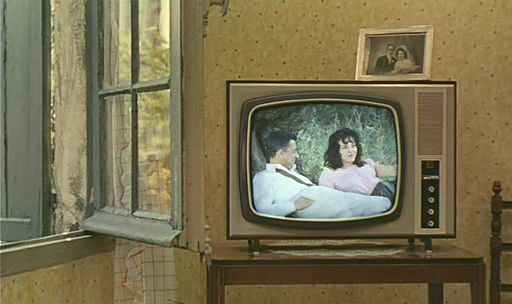


And this brings me back to Varda's film. For while every person in the film seem inherently sympathetic, Francois, the adulterer, has at least one major fault. He talks. He talks and talks and talks, yet he never really listens. He perpetually tries to explain his own acts and feelings, but never wants to hear anything about anyone else. And Therese doesn't tell him. She just wanders off, and then she drowns. Francois might be the archetypal male thinker. He thinks and thinks and talks and talks but his thinking remains completely self involved. He doesn't take the feelings of the two women into consideration. And this might be the point, a point that I think only a female director could have made. When male artists want to speak out about women's rights, they have a tendency to create women whom they themselves think are strong and good. And then voice their opinions through these characters. This strategy can lead to great results – I'm reading one of the greatest examples, Tolstoy’s Anna Karenina at the moment – but it is quite different from what Varda is doing. She didn't create any strong women in this film. In fact, they are quite weak willed, also the other woman, Emilie, whom Francois to begin with loves because of her independence, but who is quickly domesticated after she assumes the role of wife to Francois. But Varda instead perhaps showed why they are weak. Because they are not allowed to speak for themselves. They can therefore never be plaintiffs, only victims.


Such quiet, determined grace. Such beauty. Almost unnatural...

Another scene with a women drowning has been on my mind since the first time I saw it. It's from the Japanese filmmaker Kenji Mizoguchi's beautiful Sansho the Bailiff. The young woman has helped her brother escape from their slave camp, but since she fears that she would probably disclose which way he went if tortured, she chooses to walk into a pond, and drowns herself. She gracefully wanders into the water, and then the film cuts to small ripples on the water, where she has subsumed herself. I've seen Mizoguchi described as a filmmaker with 'a feminine universe' (by French philosopher Gilles Deleuze in his Cinema 1 – The Movement Image, also from Minnesota, page 192), as a filmmaker who was interested in the plight of women. But in this scene, the action undertaken by the woman is supposed to be a sacrifice, it is seen as good and noble. But is it really a healthy picture of women? Someone who sacrifices themselves for the good of their family? (Admittedly, Deleuze points to Mizuguchi as feminine in contrast with Kurosawa, and he is definitely more feminine than him. But who isn't?) It is interesting to contrast these two scenes of women drowning themselves, for the moment that Mizoguchi has removed from the sequence, the moment where the woman actually drowns, as in dying with water coming over her and into her lungs and last breaths and all those grisly details, is the only moment that Varda shows the audience in her version. And I wouldn't be surprised if that is deliberate on Varda's part, the film is quite allusive, as films of the Nouvelle Vague are wont to be. But this also points to another difference, that the sacrifice of the woman in Mizuguchi's version actually accomplishes something, that the brother is able to escape, while the drowning in Le Bonheur just seems pointless and in vain. A few minutes later, Francois has married his lover, and life seems to go on without any one really mourning... This ending is another twist on Shakespeare: where Francois seemed like Hamlet when he held his substitute Ophelia, after her burial he acts much more like Gertrud... But this ending, with one woman replaced by another, and happy lives continuing as if nothing particularly important has taken place, this ending seems to me to show 'patriarchy' in effect, in all it's petty pervasiveness, where women are completely defined by men, and their only other choice is to 'opt out' of it, so to speak, since they can never ever hope to be allowed to define their own life. And I think that this ending could only have been created by a woman, a man would have done it otherwise, he would not have shown the bad effects of patriarchy so clearly, perhaps since he as a male artist, with a strong effect on defining societal discourse, he is in fact part of the problem. And even if he created a completely new path for a woman to take, created the strongest, best female character he could possibly create, then he would inexorably have created a new woman defined by a man, and would then sadly just have become an even bigger part of the problem...

Well, to get to the point of these pretentious ramblings – and wow, they ended up being even more pretentious than I planned them to be... - this points to a problem I have with a lot of my own writing. I'm a male, heterosexual WASP. And I think and write quite a lot about race, gender and sexuality. And I kinda feel like I'm wrong in doing it. I once came to the conclusion, that I wouldn't consider myself a feminist, for that implied that I fought and spoke on their behalf, and as I've tried to explain, that can easily turn into usurping their fight and using it for my own gain. So I promised myself I wouldn't do that. I try not to speak on behalf of women, and minorities of every kind. But I try to listen. And I do my own interpretations of what they say, which can never be done without doing some kind of violence to the original, and which I feel is kinda wrong. But what to do... I've gotta write about something.

Oh what a boring, obvious, noncommittal conclusion. Let me instead end with yet another poem by Akhmatova, let Akhmatova get the final word:

Epigram (1960):

Could Beatrice have written like Dante,
or Laura have glorified love's pain?
I set the style for women's speech.
God help me shut them up again!

torsdag den 28. april 2011

White Mind / Black Feet: Race and Reason on TV on the Radio's Dear Science,


So, last week I posted a piece on the rift between rebellion and complacency in indie rock in general, and on Contra in particular. That piece was a translation of an older piece in Danish. There was a slight difference though, in the original piece, I mentioned TV on the Radio as another band, who wrote about the split between logic and emotions, sort of. But I felt like I wanted to work a bit more on that part of it, and look on one of my favorite albums from the last decade: Dear Science, To begin with, I want to apologize in advance, if people see this post as clumsy or condenscending or anything. Diplo once said: Having white kids talk about race on the internet is the dumbest thing in the world To make it even dumber, I'm talking in a language I'm not completely fluent in... So apologies in advance, please let me know in the comments, if I offend anyone or anything.


Well, if I'm claiming that the album could be about a fight between rational/irrational, then the title definitely speaks to that. It is the header of a letter to science, Rationality par excellence. We don't know what the letterwriter wants to say to science. It might be an appraisal, or a condemnation, or an inquiry, or anything really. But the title invokes some sort of unfinished dialogue with rationality. The album is perhaps the rest of this dialogue. Well, at times. One would have to contort some of the lyrics a lot to make them fit this theme (well, Owls are symbols of Athena, Godess of wisdom, and Storks... have long feet, so they are like dancing or something...). But at times the theme pops up. Often, it is conflated with questions about race.


TV on the Radio has a different problem with the rational/irrational schism, that I wrote about, than most other indie bands today. Still today, in this enlightened day and age, and within this elitist, snobbish, indie-loving subculture, the fact that they are black connotes that they are probably more 'funky' and 'soulful'. They are probably more in touch with their emotions, and... you know... bodies... This was to me an unfortunate, and no doubt unintended, subtext of Sasha Frere-Jones article A Paler Shade of White, from a few years ago - at one point he states that Wilco could stand to be more syncopated, as if that's what black music amounts too. It's also ironic that David Sitek are sometimes seen as some sort of production wizard, as if he's the 'mind' of the band, and it's not just because his production and mixing are actually one of the least rational parts of the package – though I've learned to love the jumbled, overstuffed and slightly out of control way his productions sound. The production geniuses in music has actually mainly been black, from King Tubby to The Bomb Squad to J Dilla... TV on the Radio never shone away from tackling problems related to racism and prejudice (and they didn't shy away from subverting prejudice either, Wolf Like Me could definitely be read as being about the white fear of black sexuality), but on their first couple of albums, what they incorporated of black influences was often something leftfield and slightly archaic like barbershop or jazz. It was first with Dear Science that they made numbers that could be considered 'funky'. Crying, Golden Age, Red Dress. These songs didn't sound like earlier tracks from the band, but they sounded perhaps more like what a stereotypical 'black' rockband should sound like. I've seen it lamented in some quarters, as if TV on the Radio had somehow succumbed to society's perception of how they should sound. But some of the lyrics shows that the band is very occupied with conceptions and connotations of race. There are the obvious ones, such as Family Tree, about a black man lynched because of his love, presumably white (and with it's dead narrator and two mothers 'raven haired' and 'silver haired' it somehow reminds me of Paul Celans Todesfuge). There is Golden Age, which isn't directly about race, but in the fall when Obama won the election seemed to sing to a promise of a post-racial America. But the three examples I want to use deals not so much with racism as with conceptions of race and what it does to ones self-perception.


First off, there is Crying. It is the first 'funky' song on the album, after the more rockish Halfway Home. It combines funk and soul, of course, but in it's lyrics and form, it is composed like a Spiritual. A song of lamentations, the people are crying and whying and stuff. But it also inverts the form of the Lamentation-song, people are 'calling God's name in vain' they suffer like the Lord with 'Coloured glasses. Can't see for the thorns' and in the end they should do something, anything, even 'Take this car. Drive it straight into the wall. Build it back up from the floor. And stop our cryin' It is a Lamentation song about the futility of Lamentation songs. But the lyric I wanted to focus on was 'Mary and David smoked dung in the trenches / While Zions behaviour never gets mentioned' The first many times I heard this song, I thought it was a comment on the behaviour of Israel. It probably is, but in it's context, it's much more than that. The songs of Lament in the Bible are exactly song by the children of Zion, in their exile in Babylon. The African slaves of course identified with the plight of the Israelites in Egypt and Babylon, and used used their songs to describe their own troubles. Today, the whole Zion/Babylon dichotomy is huge in Reggae, especially. So when TVotR point fingers at Zion in a song that seems inspired by Spirituals, it is a reminder that people should look inwards at themselves. Israelites. African Americans. And everyone else. Crying over how unfair the world, even though it is important to point out injustices, can hide our own transgressions.


Unfortunately, Red Dress isn't on youtube in it's album version. Go buy the album. It is a masterpiece.

Second example. Red Dress. It is probably the best lyrics on the album – and they mention 'the whore of Babylon'. What I especially love about them, is how the Red Dress / White Robes thing is reinvented in every chorus. The first verse is about defiance and joy in a cruel world. So the chorus says that we should put our Red Dress on instead of our White Robes, and dance away. But right before the second chorus, the lyrics mention 'blood of the saints shot down in the square'. So this time the Red Dress is actually a bloodied Robe. The time has come for sacrifice. And then there is the brilliant third verse. 'When the man cracks the whip / and you'll all shake your hip / and you'll all dance to this / without making a fist. / And I know it sounds mundane / but it's a stone cold shame / how they got you tame / and they got me tame' So now in the last verse, the Red Dress has become what keeps black people in their place, supplanting the white robes of the Klan, presumably. And yet this is a funk song, making people shake their hips and dance. As with Crying, it points to the problems of the genre it uses. It's a funk song partly about the problems with funk songs. It tells of the problems, but it shows the power.


Final example is the final song. It's a plottwist! After the world seems to go to hell in DLZ, due to the wrongdoings of some 'death professor' the band seems to find some glimmer of hope. In sex. In lust. This might be seen as completely succumbing to an African stereotype, not helped by the funk of it, the African sounding horns of Antibalas, and lyrics like: 'I hunger for you like a cannibal'... But another view would be, that they defeat the cliché by their defiant ignorance of it. Wouldn't not being able to sing about whatever you want, be succumbing to racism? If you have to be a counterexample to a stereotype, then you are still defined by the stereotype. I can't think of final lyrics more fitting than ''Yes dear, of course there are miracles / under your sighs and moans. / I'm gonna take you / I'm gonna take you / I'm gonna take you home' And not just because the first song was called 'Halfway Home'. They find a good irrationality, the miracle, in sexuality, and replace the crying and whying with moaning and sighing. After these lines, the only thing that remains is to allow for the marching drums and triumphant horns to get to the finish line. Brilliant.

So the lyrics are rational, but it is juxtaposed with emotional music. In a much more knowing way than on Contra. And in the end the band chooses life. And sex. It is a really great album, one of my favorites of the decade.

R.I.P. Gerard Smith, who died last week only 34 years old. Much too young. It is a tragedy, first and foremost for his friends and family, of course, but the whole world will miss his contributions to this band, and music in general.

fredag den 22. april 2011

The 'Unformulable' on Vampire Weekends Contra (10)


I like Vampire Weekend. I really do. But I think there lyrics are strange at times. Not that they are specifically bad, but sometimes they don't fit together with the accompaniment. It creates a weird chasm or something like that. But, as I will try and explain, this chasm between what Ezra Koenig 'says', and what the band actually 'does' might in fact be a huge part of their allure. I find that divide very typical of post-millenial life. And of a lot of post-millenial indierock as well. But I'll get to that in a bit. I have to warn though, these readings probably overinterprets a lot, and misinterprets at times... But I find that much more fun than under-interpreting...


Let's begin with song number two: White Sky. It's an incredibly sweet song, probably the song on the album with the strongest influence from Afro-pop. Just delicious. And as the P4K Track-of-2010 list states: 'And that's not even counting the simple, ecstatic pleasures of one of the year's best wordless choruses' But I don't think the wordless chorus is just meant to be 'pleasurable'. I actually think there is a specific point to it. The verses are about finding the sublime in the everyday, well stated in the lines: 'A little stairway, a little piece of carpet / a pair of mirrors that are facing one another / Out in both directions, a thousand little Julia's / that come together in the middle of Manhattan' The second verse is about the banalization of modern art, juxtaposed with a skatepark (not enterily sure how that fits with anything), third verse is about questioning the ordinary. And then the bridge says: 'You waited since lunch / It all comes at once' and the thing that comes is unspeakable. THAT is why the chorus is wordless. It's a song that juxtaposes everyday banality with the unusual, the controlled and rational with the uncontrollable. The feeling that comes to you can't be formulated, and can only be represented by the wordless. There is a world down here, of which we can speak, and there is the White / Wide Sky. It's a song about the Sublime, but I wouldn't call it a Sublime song... But it's very sweet.


Next song: Holiday. Again, a song about a world outside of the normal, this time described as a longing for vacation. But there are a few lines that are key to the album: 'A vegetarian since the invasion / She'd never seen the word: 'Bombs' / She'd never seen the word: 'Bombs' blown up to 96 point Futura / She'd never seen an AK / in a yellowy Day-Glo display / A T-shirt so lovely it turned all the history books grey'. Again, there is the logical, the rational, but it can't compete with the sensoral, the sensual. Texts are fine, but it is images that shakes her.


The final example will be song number six: Run. It's a typical let's-run-away-from-it-all song. But again, there is no worded chorus. Instead, a mariachi-fanfare is summoned every time Ezra Koenig sings: 'It struck me that the two of us could RUN' This makes me think two things: 1) It expresses hope and life, but it remains very flimsy and unsubstantial, showing that the plan for escape is probably not that well thought out. 2) This is probably an over-interpretation, but my guess would be that the runners are headed for Mexico... But again, there is a focus on the unuttered, but in a different way. This feeling is not too sublime, but too vague to be formulated.


So the texts focus on the irrational, the fleeting. So far so good. But here is the problem: The music never, ever makes an impression of irrationallity... In general, I probably prefer music that sounds a bit more uncontrolled and desperate, but that is a question of preference. But there is a weird disconnect between the lyrics, focused on how things should not always be drawn out and explained, saying that sensoral impressions are stronger than logical explanations, while the songs are so exquisitely composed and drawn up. It always sounds like they are in complete control... To use their own example: Most of the time, they sound much more like a history book than like a T-shirt... It's nice, sweet, oftentimes great, but there is a weird dichotomy between music and lyrics, form and content if you like.

Is that a problem? Well, I think some people get really annoyed. There has always been something self-contradictory in lyrics like 'Who gives a shit about an Oxford Comma?' Well, no one did until you wrote a song about it, guys... So my answer would probably be you four... But I must admit, to me, that dichotomy makes the music that much more relatable. I know the feeling of sitting in my room and writing long essays about how important it is to really 'live' and 'feel' and how great stuff like 'the sublime' or 'jouissance' is... I think that a lot of young people have a wish to change the world, but end up spending their time reading books and watching films about the third world. We buy Fair Trade, and we have all the right intentions, and yet we don't really rebel... To me, this band actually describe the feeling of being young in a Post-Marxist world farily well, where there isn't anymore any other plausible substitute for society as we know it... As they sing in Cousins, with biting sarcasm: 'Dad was a risk-taker / His was a Shoe-maker / You, Greatest Hits 2006 little listmaker' Rebellion and social mobility, that was fulfilled by the previous generation. Now we sit around, and are actually quite comfortable, and we don't really know what to do with all the inequality still left in the world. But then we try to change the world through writing about music on the internet, as they sarcastically point out (and yup, I feel hit, to say the least...) But my counterpoint would be, that there really isn't anything world-changing about their well-composed, worldly influenced indie-pop.


And I think this dichotomy between rebellion and comfort is a part of a lot of successfull indiebands in this new millenium. M.I.A. was grilled over this question last year. Or what about the tourist-pop of Beirut? Or take Animal Collective. In this case, the dichotomy might be more obvious than any other place, although it's not intended to be. But Panda Bear has always been much more cosy and harmonic and nice, while Avey Tare is far more noisy and impulsive. The band has sung about not going to college and has made noise-records – Here Comes the Indian is a masterpiece, and still their best – but has also made nice and sweet music, about childhood or buying a house for your family. I prefer the Avey Tare part, but I feel like I'm in the minority on this question... Or Fleet Foxes, who have lyrics that are actually quite discomforting and has a potential for disturbing people, but then drowns them in a pond of harmless indie-folk-muzak. This split between rational / irrational has of course always been a part of music, but I would claim that it has become more central since the fall of the wall... But prove me wrong if the comment section if you like.

onsdag den 13. april 2011

Bela Tarr - Werckmeister Harmonies (00) II: Attempt at Interpretation


And I'm back, witht the second part of my piece on Werckmeister Harmonies. This is longer than yesterdays, but it is in more parts, and less about theory, so it might seem shorter... If you gave up halfway through, please let me know in the comments. I'm still trying to figure out how to structure this.

The Style
Apparently, Bela Tarr insists that he doesn't make allegories. I'm not sure what to make of that. Taken at face value, Werckmeister Harmonies could seem to be about the evil powers of stuffed whales and Slovakian little people. I really don't hope that is his message. No, there are a lot of allusions and images with a lot of connotations, but most of the times, his images are much too complicated to be seen of as simply 'symbols' or 'allegories'.

To begin with, I feel as if I should use an example to explain what I mean by being too complicated to be symbolism. The opening scene is an example of symbolism. Janos uses different drunks to symbolize the planets of the solar system, and the mystery of an eclipse. If the scene had been perhaps three or four minutes long, that would probably be what we thought it was about. It was foreshadowing. An allegory perhaps. But the camera stays on the drunk men for eleven minutes. At some point, it has stopped uncovering any new levels of symbolism. We get the point. Yet the camera stays. It forces us to in the end see the men for what they are. Notice the smile of the sun. The exasperated look of the barkeeper. And, less fortunately, the bad dubbing of Lars Rudolph... The drunks stop being symbols and become drunks again. This is a feature of the long-shot. Symbols, allegories, metaphors, it is all a question of signification. And when the camera stays with an image, after we have discovered the significance of all the elements, then we are forced to notice the imagery in itself, if we haven't already. When asked why the shot of the men marching from the square to the hospital is so long, Tarr answered that it was because that's how long it took to get there. But the shot also forces us beyond just noticing that they are a mob, and that they signify danger, or perhaps political uprisings, or something. We are forced to pick out the humans from the mob.


In some ways, Tarrs style seem to echo Andrei Tarkovsky, another wilfully obscure Eastern European director, who claimed he never ever used symbolism. Filmic images are inherently too complicated to be symbols. This is not always true – for instance, the image of a cross is pretty easy to see as a symbol – but it is definitely true that visual images has more potential for complexity than written words. Although someone like Thomas Pynchon could be said to use the same kind of strategy, where what at first glance seems like a metaphor sort of takes on a life on it's own, until we cannot conceive it as anything else than as an image. I just opened up Gravitys Rainbow at random, and here is how Roger Mexico describes his loved one Jessica 'She is his deepest innocense in spaces of bough and hay before wishes were given a separate name to warn that they might not come true, and his lithe Parisian daughter of joy, beneath the eternal mirror, foreswearing perfumes, capeskin to the armpits, all that is too easy, for his impoverishment and more worthy love' (p 210 in the Vintage Edition) To begin with, it is a metaphor, but that Parisian daughter is just too detailed to work simply as a symbol. Kinda like the Hungarian drunks are.

These elaborate long takes has become a common feature of Eastern European Cinema, as far as I know dating back to Tarkovsky and Kalatozov, and today also being a fixture in modern Romaniam Cinema and the films of Sokurov. The first important feature of Soviet cinema was something completely opposite, however, namely Eisensteins montage-technique, in which shots gained meaning through being juxtaposed with other shots in agressively cut montages. The long takes does away with the montage almost completely. It is a new way of trying to be realist, that can in no way be said to be like Soviet Realist Movies, but is also very far from Eisenstain or his comtemporaries. Of course, slowness is a feature of arthouse cinema everywhere, I'm not saying it must at all times be an attack on montage. But I think it is at times a reaction against what was once considered 'proper' communist filmmaking. I think it is a huge part of Sokurovs Russian Ark for example, which was completed in a simple take without any cuts whatsoever, and which treats history as jumbled and without any kind of development. But that probably deserves it's own post.


The Whale:
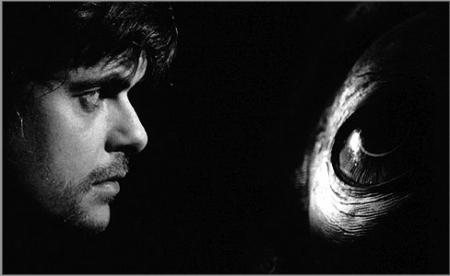
Every reading of Werckmeister Harmonies has to grapple with The Whale. It is just such as striking image, marvelously utilized by the director. And first of all, to claim that The Whale doesn't symbolize anything is just plain wrong. It is shown in the movie to symbolize a lot of things. Janos repeatedly claims, that the whale shows you the greatness of The Lord. Gyuri says the whale is a stage of evolution he would gladly had remained at, which Freud or Lacan would probably see as a longing for the pre-traumatic childhood or something. Other characters see the whale as a symbol of doom. As rotten. When discussing The Whale, it is not wrong to ask what it means. The wrong thing to do, is to ask what it means to Bela Tarr. This is unimportant, as there isn't supposed to be any single authoritative interpretation of The Whale. It is not wrong to ask what it symbolizes to Janos. To Gyuri. To the citizens. To yourself. It is far from certain that you'll agree with me when I say, that I think the whale is at least supposed to invoke the Sublime. Perfection imposible in Werckmeisters tuning. What I think everyone can agree on, is how sad the whale looks. Janos first visit to the whale is – of course – filmed as a single shot. The camera follows Janos into the trailer, and then stays there. For me, the speed with which Janos leaves this magnificent creature makes it even sadder.

The decay of the whale. The sadness of his eyes. All those points to the sad state of the sublime in the world the characters inhabit. It is really in short supply, amidst all the mediocrity.

I would propose that there is an image in the movie, that counterposes the whale: The Helicopter. While the whale is nature, the helicopter is manmade. While the whale is of the ocean, the helicopter is of the air. And while the whale seems sublime, to me the helicopter seems threatening, but slightly banal, as it glides in the air over Janos. It's the banality of evil, if I may use a term from Hannah Arendt, and perhaps plumb into clichéd banality. And of course, on Werckmeisters piano, the banality of evil is unavoidable while the sad and sublime is destroyed.


The Main Character:
When I've read articles about this movie, I have several times seen Janos described as 'not-too-bright' or something like that. It baffles me... Yeah, he is slow, but he is after all a character in a Bela Tarr movie... Far from being slowwitted, he seems to me to be an aspiring intellectual. He is the only curious character in the movie. He is the one who has to show the drunkards about the eclipse, he is the only one who is interested in the whale, he is shown reading a newspaper in a scene, showing that he is also curious about world events. But he has never been allowed to develop his abilities. He is a note in the Werckmeister Harmonies, and have therefore not been able to rise about mediocrity. He is truly a tragic character, marvellously played by Lars Rudolph. In the end, he is in short succession shoved into the only two available roles for the unusual mind in the opressive world he inhabits. First he is the dissident. And thereafter, he is the lunatic. And I'm not sure, but I think it is entirely plausible that he has been lobotomized at the asylum in the end.


The Setting:
I've already sort of talked about this, but the setting of the movie is obviously important. I've seen the settings of Tarrs movies described as being like hell or purgatory, but I have also been to a few small villages in former communist countries, and I don't think Tarrs cities are that far off. Obviously, he makes them seem strange, but the obsesive, slow camera also makes it seem quite defined. It is 'just' a little village, but that shouldn't belittle what happens. Every little village is important. It has significance, not through history or important landmarks, but through the little stories and the little people. It has significance in itself.

The real question is instead, when is this movie? This is what baffles me. Tündes commitée and the military at the end seems to suggest it is set during the communist dictatorship – of course, the easy reading might be that the movie is an allegory of the Soviet invasion of 1956 – but it doesn't really seem like a period piece. Yet again, when was the citizens, even in the smallest cities of Hungary, ever so starved for entertainment, that they would pay to see a whale in a truck? This seems more to me as a Western European, like something out of the 19th century, or from the first half of the 20th at the latest. And why does Gyuri care about a theorist from the 17th century? But the helicopter... That the place is anonymous while the time is rather confused might be simply a necessity – after all, stuff like clothing or interiour says much more about time and place, making it very difficult to attain an 'anonymous' age – but it also creates a setting, where the people and their surroundings seem very defined and important, while the events seem not as important in themselves. It is the consequences of the events, how they change the people and their city, that is the important part, rather than the events themselves.

The Plot:
Strangely, I have also seen the film described as 'plotless'. But it clearly has progression and development. Not many characters go through the movie unchanged, some of them end up severely changed from the beginning. What the film lacks, however, is any clear-cut causality in it's progression. It can therefore be said to lack a 'narrative' in the way that great historical events have mostly been narrativized. It doesn't progress with any kind of internal sense. This is extremely important, and it is a huge reason why the film must not be considered as some simple political allegory. It is rather an a-political allegory, if it is anything. We are not supposed to define, that the uprising of the people are an allegory for the danger of 'capitalist spectacle' (the circus) or foreign interventions (the Slovakian 'Prince') or Tündes cabal of militant cleanliness. No. It is not meant to be a political film. Rather, for me, the meaning is, that whatever causes violence, the effects are always the same. The weak will be hurt. The potential intellectuals will be punished. Beauty will be destroyed.


Some might say that the events are apocalyptic in some way. That the film shows 'the end of days' or something like that. I don't think so. The film might show a end of days, but not the end of days. It perhaps seems plausible to think of Bela Tarr as a religious filmmaker. With filmtitles such as Damnation and Satantango, that seems about right. And to be honest, I cannot entirely deny that there might be a religious element to this movie, Janos seems awfully Christlike in the end. But I do not think that this reading is very interesting. Janos is only a martyr insofar as he is a scapegoat. The importance is not in the absence of meaning, as that would immediately push the events into the sphere of the mystical. The importance is the abundance of meaning, and the resulting uncertainty of meaning.

However, there is an important allusion in some of the proposed causes for the uprising. We are probably not supposed to see the notion of an uprising caused by a stuffed whale and a 3 feet tall Slovakian as attacking capitalism or the nobility or anything. But I would think we are supposed to notice the absurdity of this proposed conspiracy. Which immediately brings to mind the absurd allegations thought up in countless cases against people during dictatorships anywhere. Yes, the conspiracy at the heart of the film is implausible. But so was the conspiracies which the Soviet Secret Service apparently uncovered during the purges of the thirties. No matter what the causes, of course it will all come down on poor Janos. The curious, kind, slightly naive wanna-be intellectual.

Also, while we don't know the cause of the uprising, we know why it stops. The naked old man. But what does he mean? Is he innocence? I can't look at his horribly thin body without being reminded of the camps, and all the connotations connected to them. He seems like the ultimate victim. Killing him would be the ultimate crime. And when the mob realize that this is what they've come to, the people turn around. Perhaps it shows the importance of history? If we remember atrocities, we might not commit them again? The people doesn't recognize the steps to atrocities, but they recognize when the effects have become to severe. Again, purporting the importance of showing the effects of ideologies and regimes, rather than their causes. Perhaps.

Apparantly, at a film festival, someone asked Bela Tarr 'Where is the hope?' But when the mob is topped by an innocent old man, that to me is not just hopeful, that is to me almost naive. And very, very, humanistic.


A Limited Conclusion:
Werckmeister Harmonies destabilizes signification. And it points to the trouble with narratives. Is it a Postmodern film? In some ways. I do believe, that the film has taken to heart certain deconstructivist lessons by Derrida and Lyotard and other likeminded Frenchmen. But in other ways, it is very far from what we normally consider postmodernist. Postmodernism is normally thought of as being superficial and ironic. If that is the case, then no postmodernist movie could ever contain the sadness within Werckmeister Harmonies. In fact, it might be more appropriate to consider the film as trying to reestablish meaning in an uncertain, non-narrative world. The camera insists on the importance of the people. The people matter, and they are the foundations of all that matter. If the word had no connotations attached to it, I wouldn't mind calling this movie 'reconstructivist'. It takes a world that seems meaningless, and creates it's own meaning in it.

More important, however, is that I think it is a masterful movie. In a lot of articles, the purely technical aspects has been thrown around. Yes, there are only 39 shots in a 140 minute movie. But that isn't really what is impressive. I could film 39 shots of stuff for a few minutes each, and recreate the experience. The impressive part is how extremely immersive and emotional this slow, meandering, 'artful' film is. The sad drunks in the opening shot. Or the concerned looks of Janos as Gyuri is stopped up by the complaining citizens. It is a marvelous movie. And I would think it is so successful because it insists on the importance of it's characters, in all their dull, inglorious life. The film very clearly shows melodies played out in Werckmeisters harmonies. But it insists that even the most mediocre melody has it's importance anyway. And with that banality, I will - finally - stop.

[Part I: The Title]

tirsdag den 12. april 2011

Bela Tarr - Werckmeister Harmonies (00) I: The Title

Werckmeister Harmonies is a masterpiece. It is very slow and moving. And it enables a multitude of possible interpretations. I wanted to write my own interpretation, but it became very long, so I broke it into two pieces. This is probably the most dry and boring part, but also the most factually correct. It concerns the title of the film, which is weird, but also very significant. This contains spoilers. Many spoilers. So you shouldn't read if you haven't watched the movie. But, you know, it's a masterpiece, so you should go and watch the movie. And then come back. I think it can be found on youtube, but you didn't hear that from me.


When a title doesn't imediately relate to a central aspect of the plot, it usually merits attention. That is very much the case with Werckmeister Harmonies. The title relates to an obsession of Uncle Gyuri, the method of tuning a piano as thought out by Andreas Werckmeister (1645-1706). This is a very significant allusion, but it probably has to be explained. And I'll have to warn, this explanation is quite long, and quite technical. And I'm not sure I entirely get it. But there is an inherent problem with the piano, namely that the player can't tune the instrument as he plays it. With the flute or the violin, you can microtune the instrument with your mouth or your fingers while you play. The piano works by hitting strings with hammers, it is not possible to tune the strings in any way while you play. This is a problem, as the scale as we use it in the western world, isn't entirely logical. On a piano, if you start on a C and go to an F, you have jumped a fourth. If you jump to a G, you have jumped a fifth. If you jump from C to the next C, you have jumped an octave. But the problem comes when you then jump from G to C, which should also be a fourth (you count both the first and the last note, therefore it is not a third). But the fourth from C to F will not be the same fourth as the fourth from G to C if the piano was tuned perfectly from the C. This brings problems, especially if you want to play in different keys. A melody in C-major will not sound the same if played in exactly the same way, but in D-major. That is the problem Gyuri obsesses about, and it was a problem different people solved differently. Some people chose to gather up the 'wrong' intervals in as few intervals as possible, and then never use those intervals when composing. This is called 'mean' tuning. Werckmeister created tuning systems that we today call 'well-tempered'. All the keys sound different, but none of them sound perfect, and none of them sound horrible. He did not, however, create the tuning-system that we use today. Today we use 'equal' tuning, in which there are twelve equally small intervals in the octave on the piano. Every key can be used for everything. None of them are different. None of them are perfect. They are all equally mediocre.


Prelude in C from Bachs The Welltempered Piano, pieces written to show all the possibilities of a tuning system probably quite similar to Werckmeisters. You all know this one. This is actually in a temperament called Kirnberger III, which seems to be more of a 'mean' kind of tuning.

Werckmeister held another view on musical theory. If you only play on the white keys on a keyboard, you can actually play eight different scales, depending on where you start. In the old days, people used to write music in all of these scales, called Lydian or Phrygian or Mixolydian etc. But Werckmeister was among those who thought that only two keys were actually useful. The one starting on C, then named Ionian, what we today call a major key or Dur. And the one starting on an A, Aeolian, what we today call a minor key, or Mol. Normally, Dur or major is considered happy and optimistic. Good. While Mol or minor is considered sad and pessimistic. Bad.

Now, all the keys today are equally mediocre. Isn't that a wonderful metaphor for communism? Instead of exploiting the differences in humans, communism forces them to be the same. Reducing a multitude of keys to only two opposed possibilities. Couldn't that be seen as a metaphor for the Dialectic method, a keystone of communist thinking? As Gyuri first describes his theories, he is sad that the technicians has defeated the natural state. The god-given state. He longs for a better time, the time of the Greeks, when the notes were thought of as stemming from the Gods, and difference was allowed. But what he doesn't mention is, that the view of differences as created by God also allowed for slavery to exist in ancient Greece. He does, however, allow that there will be difficulties in playing on his perfectly tuned piano. When we next see Gyuri at his piano, he is playing a recording of Bachs suite in E-flat major from the Well-tempered piano. Now, Bachs suites were written to show the possibility of the well-tempered way of tuning the piano – as opposed to the perfect way, but also not the way we tune the piano today – and while the suite sounds quite lovely on a piano tuned after Werckmeisters instructions, it sounds false and horrible on Gyuris piano, which he also admits. This is of course the dangers of difference, as allowed by capitalism. If we allow for the better, we must also allow for the worse. And as some keys will allow a lot of different melodies on the perfect piano, while others will allow only a few, so will some people be allowed a lot of different possibilities in their lives, while others will have their lives severely limited by their surroundings.


Prelude and Fugue in E-flat Major. This sounds horrible in Gyuris tuning system, but quite lovely in Welltempered, and Equal tuning.


As you've probably have noticed, I have cheated a bit. Werckmeister never proposed equal tunings, so my claim that the title of the film can be seen as symbolizing communism is obviously false. But in fact, since we doesn't use Werckmeisters tunings today, Gyuris obsessions seem totally obscure. If you now about the state of tuning today, than the title will signify something, that can by a deroute come to signify communism... But, the question remains, why is the film called Werckmeister Harmonies, if Gyuris obsession is completely arbitrary? Well, Werckmeister Harmonies is definitely a better title than Equal Tuning. It is actually a strikingly brilliant title, mysterious yet catchy. And it has almost none immediate connotations. One of Werckmeisters successors was named Johann David Heinichen (1683-1729), had the film been named Heinichen Harmonies, it would invoke some unfortunate thoughts in people... Also, the title puts a face on the symbolism. It is not just a metaphor. It is more complicated than that. It is a part in a historical evolution of tuning, and it is a person with a background and a life and probably relatives. Sufferings and triumphs. Tarr focuses on the human rather than the allegorical

The theme of the piano reaches a very ironic and bitter conclusion. Gyuri tells Janos that he has retuned the piano, and that now he can play anything on it. But at this point it doesn't matter, as Janos is catatonic. And also, we have never ever been given the slightest hint that Janos might be able to play the piano. It doesn't matter to him now, and it kind of never has. The ending seems to say, that no matter the piano, which in my reading means no matter the political system, Janos would not have been able to play. Which is terribly pessimistic. And I've sort of created other excuses as to why that isn't the point of the film, but we'll get to that. Tomorrow, hopefully.

If you really found this explanation interesting, check out this article from Slate Magazine. Also, if you can find this kind of thing, then check out the article 'The Recognition of Major and Minor Keys in German Theory: 1680-1703' by Joel Lester from Journal of Music Theory vol 22 no 1. Spring 1978. Page 65-103. It's quite interesting, but very confusing. Werckmeister is dealt with at the beginning of the article, underlining that while he is very important to this history, he is not the endpoint Gyuri makes him out to be. Hope you'll wan't to read the second part of this piece as well. It deals with whales and helicopters and politics and stuff. And please, if I have misunderstood something, let me now in the comments.

[Part II: An Interpretation]

onsdag den 16. marts 2011

Of Montreal - Hissing Fauna, are you the Destroyer? : Gender and Sexuality 2


And another translation of an old piece, this time on one of the most widely wellliked albums of the last decade. The features of Hissing Fauna are wellknown. Cheerful, bouncy dancepop hiding dark, disturbing, depressed lyrics. The story behind the album is wellknown as well: Traveling to Norway to provide healthcare for his little daughter, Kevin Barnes, singer and central songwriter of Of Montreal, got a severe depression – understandably, Norway is a sad place... - which drove him and his wife apart. The album was written after his wife left him, but luckily the couple got together again just before it was released, ensuring a happy ending and a less depressed mood on the ensuing albums. The tale as it is told on the album is slightly different, though. Themes of multiple personalities and gender and sexuality has been added. Kevin goes to Norway, becomes depressed, and other elements of his personality begins to bubble up inside of him. His wife leaves him, and on the central, 12 min monolith The Past Is a Grotesque Animal, he suffers a mental breakdown, after which he takes on the personality of Georgie Fruit, a middle-aged, transsexual, black man. The rest of the album follows Fruit, as he dances through town, trying to immerse himself in an orgy of transsexual promiscuity.


Lets repeat that part: He has a MENTAL BREAKDOWN and becomes transsexual and promiscuous. And this breakdown is caused by the dissolve of his heteronormative life. Not the most progressive view on sexuality, to say the least. On the second half of the album, we have some really dark lyrics. How about: 'Eva, I'm sorry, but you will never have me / To me you're just a faggy girl / and I need a lover with soulpower' (Bunny Ain't No Kind of Rider) Or: 'There's that girl that left me bitter / Want to pay another girl to just walk up to her and hit her / But I can't I can't I can't'. (She's a Rejector) So we've got the coupling of 'queer' sexuality with first of all mental instability, but also with violence against women, and a use of the word 'faggy' as a put-down. I can't understand why it hasn't been focused on more by the media or the blogosphere, it seems unfortunate at first glance, to say the least. Where Magnetic Fields emptied gender roles of any and all connotations, and used that strategy to talk about prejudice, then Kevin Barnes uses 'perverse' sexuality to show the abnormal, the sick, the disturbing parts of his mind.


And this was what I had planned to write, when I first started writing this piece, a long time ago. Magnetic Fields = Good, Of Montreal = Bad. But during the research phase, I had to read the lyrics more carefully, and that made me reconsider my opinion. The point behind the queerness was a bit more complicated than I originally thought. I found a possible explanation in a key passage from the aforementioned The Past Is a Grotesque Animal: 'I fell in love with the first cute girl that I met / who could apreciate Georges Bataille / Standing at a Swedish festival / discussing Story of the Eye' I do not know a lot about Georges Bataille or Story of the Eye, but wiki is your friend and... it is perverse to say the least. Eros and Thanatos are mixed, as the main couple copulate while people expire apparently. Blood and semen and pee is mixed, and eyes are inserted into stuff... And this is what brought Kevin Barnes and his wife Nina Barnes together in the first place... This is a central piece of information, it shows their heteronormative relationship to be founded on a common interest in perversity! Paradoxically, perhaps... So then, the second part of the album could be seen as trying to regain heteronormativity, through a reconnection with perversity! And it is an important detail, that he doesn't dare to live out the perversity! As the lyric says, he can't he can't he can't! It is a failed attempt at rediscovering perversity. Now, I don't know enough about Marquis de Sade and Bataille and stuff like that, but the second part of the album seems to be inspired by their books, as the narrator tries to describe the unhealthy part in him by emerging himself in perversity. And that he fails to do so becomes a bit sad, he doesn't dare to go through with it.


Would it have been a problem if the album had just simply coupled mental instability with diverting from normative sexuality? Not really. It is important to remember, that the album at most only claims to be a description of the specific breakdown of Kevin Barnes. Therefore, it never proposes that all promiscuous or transsexual people are mentally unstable. Or the other way around, that all mentally unstable people are promiscuous or transgendered... And besides, I can think of few things more boring, than a description of a mental breakdown, that has been sanitized to be more politically correct. And besides besides, the detail with Georges Bataille shows that there was never any heteronormativity to begin with. But I honestly think it is a problem, when discussions of the album glosses over the complicated lyrics on it dealing with sexuality and perversity. Because it IS an unhealthy view on gender and sexuality, it seems to me as if it is meant to be, and is meant to show how badly unstable Kevin Barnes has become. And that it passes without much comment into the public sphere seems to suggest that this theme is something that reviewers/bloggers are perhaps not really focusing on. There was a discussion some time ago (less time ago when the Danish version of this post was posted, it is still an interesting essay), on a difference in the ways race is presented by Coco Rosie and Vampire Weekend, and in some ways, their strategies mirror the strategies I have claimed to be central to Magnetic Fields and Of Montreal. Like Vampire Weekend does with race, so does Magnetic Fields treat gender and sexuality as if there is no problems related to them, thereby perhaps normalizing both things in society. And Coco Rosie as well as Of Montreal draws attention to how messy and problematic the common discourse on race and gender and sexuality still remains. But the problem is, not a lot of attention has actually been drawn to the gender/sexuality question, at least in the case of Of Montreal. I haven't seen a lot at least. And if that is the case, then it might point to a blind spot in our culture as a whole.

[Part I: Magnetic Fields - 69 Love Songs]

tirsdag den 15. marts 2011

Magnetic Fields - 69 Love Songs : Gender & Sexuality 1


This is not a defense of 69 Love Songs. This is not a re-review. I happen to think that this albums is one of the best albums ever, but this post is not trying to establish why this is a great album. This album is one of the least reviewable ones there is, to look at it and decide what the ratio of good to bad songs is, is kinda missing the point. I have a hard time figuring someone who won't find at least a few songs they will love, and a few songs they will think of as filler.

But some of the specialness with this record stems from how it portrays gender and sexuality. Throughout the record, the sound shifts, the genre shifts, the gender roles shifts, we have happy songs, sad songs, platonic love songs, explicitly unplatonic lovesongs, lovesongs from boy to girl, girl to boy, boy to boy, girl to girl, a single boy to dog one, although luckily that's one of the platonic ones, and a whole lot of songs where the gender of singer and sung-to is indeterminate. It all becomes overwhelming and confusing. And in this way it manages to question our normative genderroles. If not in society as a whole, then at least in popular culture and in the normal lovesong. This is a discussion of how the album does that, a discussion of how Gender and Sexuality functions throughout these 3 discs and 69 songs. And oh, this is a translation of a blogpost originally written in Danish. Sorry if the syntax is a bit weird here and there, I'm working on my translating skills.


As I said, the album is overwhelming. There is so many songs, and no clearcut development. The placing of the first and last song seems alphabetically determined, from Absolutely Cuckoo to Zebra, and while the first song is about the early stages of love (the precise opening lines are 'Don't fall in love with me yet / we've only recently met) the last one is about a lover who has been given everything, but remains unfulfilled (which could be seen as a slightly aggressive, though kinda humorous, attack on the listener...).But there is no narrative, the album seems made for the CD-age, for the shuffle button or the creation of personal mixtapes. It is therefore a bit difficult to figure out where to start, but let me begin with a song from CD 3: Acoustic Guitar. Seems like a simple lovesong, although lesbian. Girl wants guitar to play well, so she can get girl back. But doesn't this subject seem to fit better, if the voice of the girl is meant to sound like a young man? The idea of a suffering artist, trying to get the girl through his artistic ability, that is normally a role associated with men. And why determine the gender based on the voice? In The Night You Can't Remember, the male voice is definitely meant to portray a woman, as she gets pregnant during the story... And in The Luckiest Guy on the Lower East Side, the deep voice is supposed to be a young infatuated man (probably about 16, he is the only one of his friends with a car) but he really sounds less like a young man than the singer of Acoustic Guitar. It's probably just a traditional boy-girl lovesong, just performed by a woman.


But if that is the case, then we should probably reconsider several other songs. Like Come Back From San Francisko. Once again, it is a woman singing, the song is aimed at someone meeting 'pretty boys in discos'. If the singer is a woman, well then the addressee is bi-sexual, boy or girl, hard to tell. But it probably makes more sense if it is once again the voice of a young man, and all the involved are gay men. Again in Reno Dakota where the woman sings 'Have I annoyed you / or is there a boy who / well he's just a whore' It makes more sense if they are all supposed to be boys.


But why talk about 'sense' in situations such as these? Because we have certain preconceptions of gender roles. Boys play guitar, boys dance in discos in San Francisco. Once you realize this, the role of gender becomes kinda muddled in a lot of songs. On of the most wellknown songs is The Book of Love, which is mainly about the features of aforementioned lovebook. But, while the singer is a bass, in the chorus he inhibits the role of the receptor in the relationship, traditionally associated with women: 'I love it when you sing to me / you could sing me anything' and 'I love it when you give me things /you aught to give me wedding rings' Why not just place a woman in the narrating role of this song? But on the other hand, why not just a man who likes to receive presents? And who knows whether the giftgiver is male or female, the song never offers any kind of answer to that question. But a lot of songs really don't, yet we always just presume that they are heterosexual lovesongs. I have read several 'alternative' interpretations of love songs, proposing that they are actually about love of heroin, but very few ones that propose the song to be about homosexual love, or even just love from girl to boy instead of the more common opposite.


The theme of gender as construction, and gender as performance, runs through the record, constantly being varied and repositioned. And at this point, I would like to offer a ridiculous overinterpretation based on a drawn out explanation of a bad joke. Bear with me. It's about that boy-dog lovesong, Fido Your Leach Is Too Long. Every verse ends with the joke, that we presuppose the singer will use a dirty word: 'You scare me out of my wits / when you do that shit/-zu, Fido! Your leash is too long' and 'I don't care what you fo(ck)/-xhounds do, 'cos your leash is too long' It's an old joke, but under the circumstances it could be seen as attaning a more significant meaning. The humor arrives from the fact that we prematurely judge what the next line is supposed to be. We become prejudgmental! As we finish the sentence before we have all the facts, so does we in everyday life 'finish' the views we hold of people before we have all the information! It is completely human, piecing together a mental composite image out of all the signs we receive, we do it in language, we do it all the time everyday, without contemplating it. We cannot function in a highly complex information society without doing it all the time! Judging that the weather must be cold because people are wearing lots of clothing, judging that the driver of a big SUV must be environmentally insensitive, judging that a gay guy must be overtly effeminate, or a gay girl must be really butch and hate men. In essence, it is all graduations on the scale of prejudice! Though of course, the consequences are completly different. I don't want to make it sound like Stephen Merrit + co trivializes prejudice. But they do show how common it is, and how hard it would be to completely get rid of it.

So what are we supposed to do to fight prejudice based on gender or sexuality? Well, the record does not hold the answer. In the end it just presents a lot of different people and doesn't judge them differently whether they choose to live up to normative genderroles or subvert them. How you present yourself is always a performance, the amount of acting you want to do is up to you. One moment in A Chicken With It's Head Cut Off it says Let's Just Be Lovers, and the next one we should pretend to be bunny rabbits... The message I get from the record is that love is always a mix of Just Being and Pretending. As long as you are aware of this, and tries to be the least judgmental person you can be, then it'll probably work out. Kind of an old school hippie vibe.


In that way, 69 Love Songs end up questioning our genderroles and conceptions of sexuality. Not by drawing attention to how arbitrary and oldfashioned they are, but simply by discretely destabilizing them, through several songs that doesn't really make sense. As a good friend of mine – who blogs about music in Norwegian – pointed out, the title of the album points to a sexual position that gay and straight couples alike are able to perform. And so would any pairing of boy and girl be able to 'perform' the scenarios sketched out by these oftentimes brilliant songs. As I said, I don't want to argue whether this album is a masterpiece or a classic or whatever. But it has a rather unique and nuanced view on gender, for a rockalbum.

[Part II: Of Montreal - Hissing Fauna, Are You the Destroyer?]