Viser opslag med etiketten UK. Vis alle opslag

fredag den 11. april 2014

CPHPIX day 8: History of Fear, Casa Grande, The Zero Theorem, Heli

So the jury is out: Blind won the PIX-award. Called it. I'd sorta hoped that Small Homeland could have won, that one is a bigger film, somehow, though also more flawed. The jury also cited Luton and Casa Grande as their favourites, I liked the first one, and reviews the second one further down. But first, another competition-film, History of Fear from Argentina.

History of Fear (Benjamin Naishtat, Argentina, 2014)


Argentina's has been booming as an artfilm nation so far this century. Lisandro Alonso, Celina Murga, Lucretia Martel. Last year Leonardo Brzezicki's Night was one of my favorites at the festival. This year, there were two Argentinian films at Berlin, Celina Murga's The Third Side of the River and this one. It's rare to have a debut-feature at one of the big festivals, so that made me give notice. But while the film is quite good, especially in the second half, it wouldn't be my favourite to win.

The film is pretty similar to Luton. Once again, we have snapshots from the lives of loosely connected people. This time it's centered on a large wealthy family, living in gated communities, and their servants and the boyfriend of one of the servants. The opening scene, filmed from a helicopter flying over makeshift shanties bordering the gates and calling for their eviction was pretty striking. But I preferred the aerial shots in Small Homeland. As a series of weird vignettes followed, I couldn't escape the feeling that something was missing. The film does not have the exhuberant filmic qualities of Luton. But I think the main problem is in the actors themselves. Or it might be in the staging of the actors. Either way, they did not give me what I needed. There is an early scene at a fastfood joint, where one of the customers all of a sudden starts bending down, and then twisting around in a sort of slow-motion dance. It could be really beautiful, poetic, or perhaps surreally weird. As it was, I didn't get what the point was. Perhaps the vagueness was intended, but when it happens over and over again, it's hard not to take it as a failure in the filmmaking.

The film was still pretty interesting, and I always love it when filmmakers try to make their point through filmmaking instead of plot or dialogue. But it still felt a bit below the bar set by so much of what I've seen at the festival. However, it nailed the ending, where so many other films have stumbled. Once Luton got to it's ending, it did sort of go for something a bit obvious, and it flailed a bit. History of Fear did something more interesting. It takes it's disparate plot-strands and plays them out over an extended sequence on New Years. Nearly all of the characters come together in a long sequence, which is striking without being melodramatic, and plays out the thematic in a non-obvious way. That isn't easy to do. But I'd still put the film in the second tier of competition, after Small Homeland, Luton and Blind.

Casa Grande or The Ballad of Poor Jean (Fellipe Barbosa, Brazil, 2014)


Casa Grande is sorta second tier as well. It's once again really self-assured filmmaking, but it's also a bit safe. Brazilian cinema might also be in a boom, or there might just be a concerted effort to push Brazilian culture in the year of the world-cup. The brilliant Brazilian film Neighbouring Sounds won the competition here two years ago, with a collection of themes quite similar to History of Fear and a bit like this one. That film is far superior to this one, though.

This film follows the downward spiral of a wealthy family, living in the titular big house. The film especially follows the young son, who in all this is also involved with his first girlfriend. It's all well and good, and very filmic. The titles play out over a long static shot of the father going from the jacuzzi up through the garden and into the house, shutting down the music - which thereby surprisingly turns out to have been diegetic - and thereafter turning down the lights in the house. That music is one of many fun details in the house, unceasing cello-music is heard everywhere through a smart stereo system. A repeated scene shows the downward spiral, from one maid picking up a driver and another maid, to the father himself having to pick up the one remaining maid. The film is full of visual flourishes like that, and as such I liked it. There is nothing wrong with this film. But there's just nothing especially good about it either.

I wish I could have stayed for the Q&A afterwards. The director seemed like the most sympathetic guy ever, as he told us he loved presenting this film in Denmark, as his first love and first kiss was with a Danish girl. And the film was so incredibly sympathetic to. All the characters were kinda nice, even the shortsighted boorish ones. The story of young love was cuddly and swooning. And sexy. But all this makes the film seem a bit insular. There is some bite in the discussions of a quota system for minorities, which comes to the fore as the son and daughter realize they might not be as privileged as they thought they were. But with stories to tell about all the inhabitants in the big house, and a love story as well, the film becomes crowded and fails to say much about broader issues. It becomes a pretty typical indie-film, and I was not surprised to see it having been involved with Sundance. Perhaps that style is just not to my taste. But I still thought it ended up being a bit toothless. Only in the final stretch, with a trip into the favela, do we get an understanding of just how Grande this Casa has been in relation to the rest of society. Those scenes were good. The whole film was very nice. Neighbouring Sounds is loads better, though, and I can't imagine the prize going to two Brazilian films in three years.

The Zero Theorem (Terry Gilliam, UK, 2013)


At times I feel like Denmark doesn't deserve CPHPIX, which sorta makes it one of the best film-festivals in the world. It consistently has the cream of the crop of modern film-art, offering the chance to see the best of Taiwan, Iran, Romania, all in two weeks. And many people, including many of the gate-keepers, treats it as a genre-festival, where William Friedkin is the most important director in the world. That just keeps people out of the theaters where the good films are showing, which I'm most of the time fine with, as it makes more room for me. But then I go to a completely packed screening of the latest from Terry Gilliam, in the huge room 3 at Grand, and I feel a bit alienated and slightly sad.

Terry Gilliam? Who in the world has cared about him for like, the last 20 years? Well, I sorta did, I saw The Imaginarium of Dr Parnassus, and liked it. And truth be told, this film is billed as the last in a trilogy of dystopies beginning with the two Gilliam-films most people prefer: Brazil and 12 Monkeys. Unfortunately, that just means that we've seen all of this before. This dystopia was just sad, a confused missive from an old man. It's a world where the tv-channel is called DuMBC (ba-dum-tjij) and the Big Brother-like corporation is called ManCom (get it? Otherwise, the strategically places logos on the life-size posters of Management will spell it out for you) It's also extremely inconsistent: The main dystopic thing about the world seems to be that commercials are allowed to speak to you, creating a hellish soundscape, and apparantly nobody has ever thought of inventing headphones. But then the main characters goes to a party, where the satire is that everyone is dancing to their own music on headphones. But there's still insanely loud dancemusic, because Gilliam has to have the mood seem hellish, and the creepy view of people dancing in silence apparantly would be too subtle. It's just sad, really.

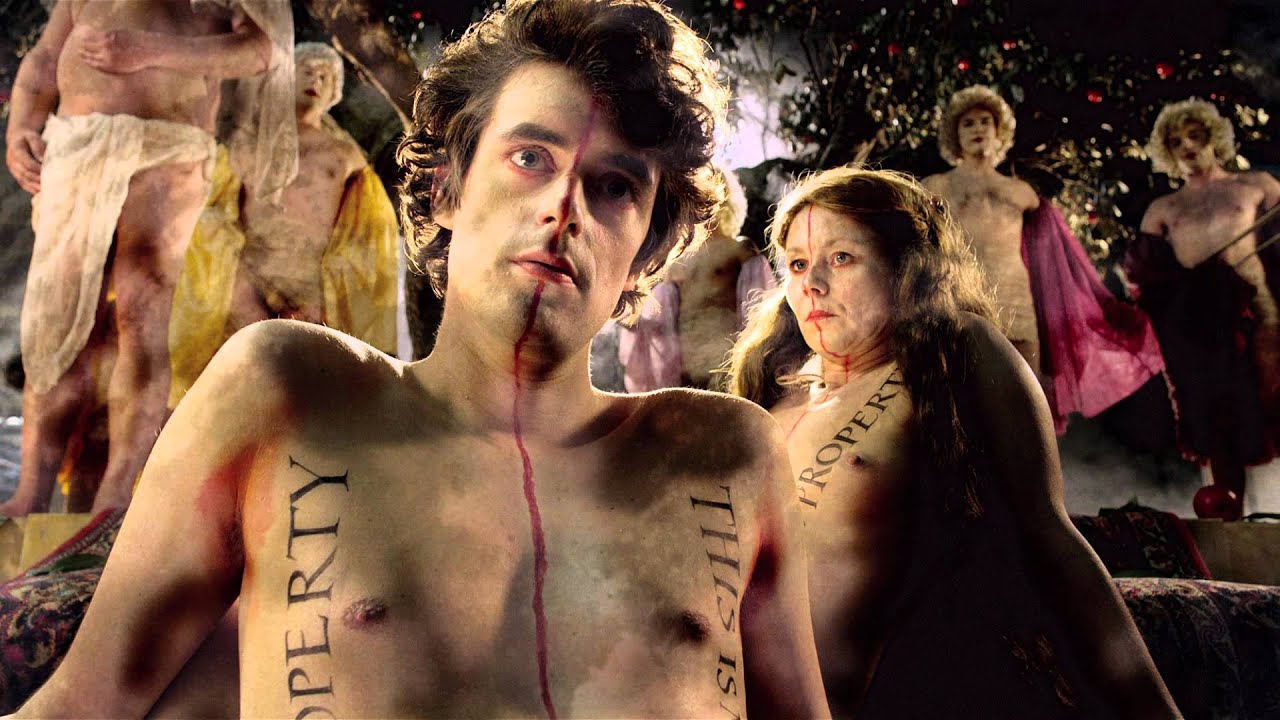
And, oh yeah, the main character. This is the kind of film where the main character is named Qohen Leth, after the Hebrew word Qoheleth, meaning Gatherer, Teacher or Preacher (thanks wiki) Qohen is an 'entity cruncher', meaning that he solves mathematical problems through playing a 3D-simulation that looks like something from fifteen years ago. He is hired by 'Management' to solve the Zero Theorem, and I'm just going to spoil it to you: He's trying to prove that the universe will one day contract and end up in a spot with Zero width and breadth. Apparantly, if this theory - which I know of as the Big Crunch theory - is true, then life has no meaning. I fail to see why that is. As far as I know, the alternative to the Big Crunch is that the universe keeps on expanding, until every star goes out and all matter and energy is so far from each other that nothing ever happens anymore. That to me seems more depressing than the Big Crunch, which at least offers the possibility of rebirth. That might be completely off, but I like that theory. Also, the fact that the world will someday end, the Sun will go out, the Earth will become inhabitable, isn't that something that kids learn by a really young age? That isn't something that takes extremely complex calculations to figure out (the outcome of which anyhow depends on the gravitational pull of the mysterious Dark Matter and Energy, right? So wouldn't the way to go be to sponsor more cosmological research?)

Boy, I've drifted off course, but nonsense like this invites that. The good news is that Gilliam pretty much drifts away as well. The film drifts away from it's rubbish cod-metaphysical questions and into vignette-like stories about the supporting characters, including a virtual reality sex-worker and Managements unruly son. Also, a digital shrink, who's one of the most annoying characters I've ever seen. In the end, when the pieces of the puzzle should fall into place, we might be in Qohen's head and it might all be bullshit. Even Management asks 'Does it matter?' No, it does not. Nothing matters in this deeply stupid film. As such, I liked that the film ends with a focus on visuals. That is the only thing that sorta works. This is the worst thing I've seen at the festival, and though it's bad it wasn't even that bad. Didn't hate it, just felt tired. It's competent. There are a few funny moments and ideas. But only a few.

Heli (Amat Escalante, Mexico, 2013)


Mexican art-film is at this point probably mainly Carlos Reygadas, director of successes like Silent Light and Post Tenebras Lux. I'm ambivalent on Reygadas, but really liked PTL. Amat Escalante has been described as Reygadas' 'protegé', and there was suspicion that that was the main reason Heli was invited to Cannes, where it surprisingly won the Best Director Award. No need for conspiracy theories, though, this film is plenty strong on it's own.

It's more visually normal than Reygadas though. There's no denying that Reygadas has developed an unique sense of style and plot, which Heli doesn't quite have. The film considers the effects of the Drug Trade on Northern Mexico, and it has unflinching violence and an extreme sense of dread. The first shot starts on two bloodied bodies in the back of a pickup truck, and then slowly moves to look out the front window. It is beautiful but still dreadful. Also, Escalante might actually be a better director of actors than Reygadas is, there is never the sense of the actors being used as models, that I sometimes get from Reygadas. A short clips has a young boy going up behind the podium where an official held a pointless klichéfilled speech a while before, on the governments strong response to the Drug problem. The kid just acts goofy, grinning from ear to ear, without saying anything. And yet, the shot says so much about Mexico, its politicians and populace. This is the kind of shot that History of Fear needed more of.

Every write-up I've read on this film mentions a certain moment of chilling, avert-your-eyes, how-did-they-do-that-and-what-sick-mind-thought-that-up violence. And yeah, it's there, awful and gut-churning. But knowing that it was there, I was surprised at how early into the film it arrives. Knowing this is a film on Drug Violence, with hard-to-take scenes, I expected it to just be a downward spiral into more and more awful sadism. That isn't quite it, though. The latter half of the film is a powerful depiction of trauma and uncertainty, a feeling of loss after a catastrophy, and a constant fear that the bad things could pick up at any moment. Escalante never makes exactly clear the structures of crime in the area, so we never know what will trigger the next plunge into despair. As a result, I've rarely been wishing so strongly for a - good - film to end, as I did with this one. Oh, please, no more. Also, this restraint actually makes the film that much more awful. There is a twisted kind of mercy in the film. Even the ruthless, mercyless killers aren't completely sadistic. This makes it such a chilling statement on the Drug War, because it's not evil. It's not sadism. It's not even quite chaos or anarchy. It's logical. Cold, mercyless logic, carried to it's dehumanizing conclusion. Awful.

onsdag den 9. april 2014

CPHPIX day 6: For Those in Peril, Luton, Blind

Every festival should have a competition, and the one at CPHPIX is called New Talent Grand Prix. It's only for debut features. I like that, it means getting to watch films that aren't at every other festival, and oftentimes the films are smart, but in an unassuming way. Also, they are often quite short. It becomes almost relaxing in the midst of grand statements by the masters of the film-world. I saw three yesterday, two hits and one miss. Which is a good ratio, IMO.

For Those in Peril (Paul Wright, UK, 2013)


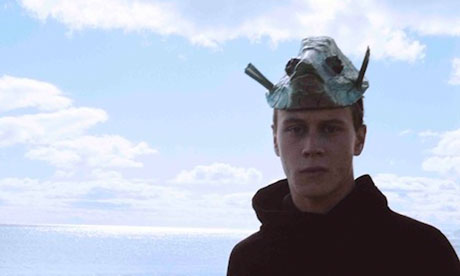
Aaron is the only survivor after a catastrophy at see, claiming five lives including his older brother Michael. All of the inhabitants in the small Scottish village looks at him with unease, some even blaming him for the disaster. And obviously, Aaron has survivor's guilt and PTSD to spare. And wasn't he a bit weird, even to begin with?

That is the simple premise of Paul Wright's film. That is really all there is to it. We follow Aaron around as he tries to reach out, but also retreats into himself whenever asked about the disaster. And it goes downhill. Intercut is old homevideos of Michael and the rest of the family, as well as news clips on the disaster, and weird impressionistic sequences dealing with the towns mythologizing of the sea. Voiceovers abound, from Aaron, Michael and a Greek chorus of villagers. And there is obviously weird music.


I've heard people are describing it as being a bit like Terrence Malick. Which is half-right, impressionistic montages with voice-over, that's Malickian. But it is more like cod-Malickian, more like a film such as Beasts of the Southern Wild - except not that good. Whereas in Malick, the style creates a world and searches for life or God or Wonder, in this film Paul Wright makes sure to root the stylistic flourishes in easily understood ways. Oh, it's depicting the news coverage of accidents like this. Oh, where getting inside a damaged mind. Oh, now we're recovering repressed traumas. It becomes insular, smaller, and more safe. The film dives into the mythology of the ocean, but it keeps it all at bay by showing Aaron as more and more insane.

And then there's the end. Yeah, spoilers and all that, but for the second time in a row, I feel like I should point out that the end is pretty bullshit. It's not that it isn't inventive, and it makes way more sense than the insane ending in Real. But it's also a really boring and obvious way to end the film, and thematically, it just muddles everything, while giving off a vibe of vague happiness. Meh. I consider this a miss. It's an ok film, but nothing more than that, I don't think. Paul Wright has talent, and if he cuts down on the klichés and moves in a more daring direction, then he could make something good. But that's rarely what happens, right? Someone who let such a small and personal film be flawed by so many klichés will rarely become more personal as the budgets become bigger... Even so, worth checking this one out, and the next thing he does. I will scratch my head if it wins, though.

Luton (Michalis Konstantatos, Greece, 2013)


Ruminations on an enigmatic title: The British town Luton, where a character is sent at the end of this film, has apparantly been named the most boring town in the world. If you put Luton into google translate, you get asked if you wanted to write λυτών or lytó̱n, meaning 'catalysts'.


This is an enigmatic film. The plot considers the daily life of three, seemingly unconnected characters, and the significance only becomes clear late in the film. For most of the film, any plot is so slight as to be non-existiant. What keeps the film watchable and often riveting is the formal qualities. Long-held and static shots showing only part of the actors faces. There is a brilliant long zoom-in on a couple of tounguekissing teenagers. Another impressive handheld shot follows a young woman in a clothing shop, until it settles on a mirror, catching three characters at once, and it is a brilliant composition. There are several of these handheld, shaky shots of characters in public, often with unnerving jingle-music in the background, and they never stop being off-putting and alienating. Actually, most of the film is brilliantly filmed, and for that reason alone I whole-heartedly recommend it.

I don't know how profound I find it, though. The director was there, and he talked about trying to capture real life with these long shots, and well, if that was the point, then I think he failed. He's stylized the world, and it didn't feel so real to me. It felled like a satire, an exhaggeration, which isn't negative in any way, I probably prefer films that do that. But it isn't real life. And that problem might muddle the latter section where hum-drum reality is shattered and the themes of the film becomes clear. But it was never really real life, and the characters were perhaps not developed enough so that their later choices hit with the force that it was supposed to. As such, the impact of the film is slightly blunted.

That's a problem, but it doesn't kill the film. And it's a problem I imagine could be gone with the directors next film, and with his strong sense of the possibilities of film, the next one could be truly great! Also, despite it's flaws, I would have nothing against it winning the grand prize. It's my personal favourite of the three, but I'm a sucker for this kind of thing.

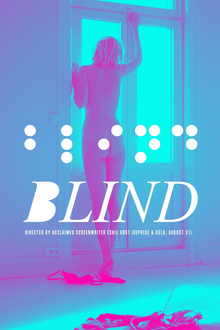
Blind (Eskil Vogt, Norway, 2014)


Luton wont win, though. Not with Blind in the competition. Blind seems like the perfect winner: It's a crowdpleaser, it has visual style - though not enough to be off-putting to anyone - and it has name-recognition. Eskil Vogt used to work with his more famous compatriot Joachim Trier, who's film I've yet to see. But who has quite a name, very much so in Denmark. The cinema was completely packed, as far as I could see.

We got to see a very fine and inventive film. Ingrid is a writer, who has turned blind. She spends her days in her appartment, afraid to go out - in a frightening black scene with a cacophony of street-sounds over it, we feel what she's afraid of. Instead, she invents a story with a love-triangle, between Einar, a loner with a porn-addiction, Elin, a divorced mother from Sweden, and Ingrid's own husband, Morten. The film cuts back and forth between those two stories, sometimes in the same scene, as we switch from the real world to the world Ingrid imagines. Ingrid does a sexy little striptease in front of Morten, and he seems really aroused, but then we hear clicking-sounds and we realize he has been writing on a computer the whole time. All of a sudden, there is a computer in the scene. Dejected, Ingrid goes to sleep, and then we see that Morten actually is chatting with Elin! Obviously, we're back inside the head of Ingrid.


The whole film is full of inventive stuff like this. As such, it becomes a really visual film. What could have been a boring shot-reverse-shot scene between Einar and Morten is enlivened by Ingrid's voiceover, as well as her inability to decide whether it takes place in a café or on a bus. There is an absolutely brilliant sequence a short way into the film, depicting the development of Einar's porn-addiction, which means this film has more naked people in it than most films I've seen. And also, while that set-up could have let to something really boring and moralistic, it's pretty nuanced. Watching fetish-porn makes him learn stuff about himself. Watching 'natural' girls means that he can't stop imagining what all the woman on the street looks like while masturbating. But this sequence is eclipsed by another one later on, dealing with the aftermath of Utøya. Just devastating, and the point at the end - that everyone was now a bit scared of reclusive men like Einar - is really tough to take.

This is a small but smart film. It can both lambast Morten for being afraid to make a funny racist joke, while still making sure to point out later on the joke was factually wrong. It has a great script, great acting, and a fine visual style. I did not like the conclusion, though, which seemed a bit bland in it's epiphanies. Until then it was a lark, and the actual final scenes were once again daring and fun. I'll put my money on this to win, even though I'm probably more a fan of the formalism in Luton.

fredag den 4. april 2014

CPHPIX day 1: Our Sunhi, Free Range, Goltzius & the Pelican Company

Well, this is pretty simple: I see a lot of films at CPHPIX, and then I write about them. I did this last year, in Danish, and this year I'm going to try and see what happens if I write it in English. If I can get people to read it. I'm trying to figure out how to steer people this way through twitter, I guess I have two weeks to figure it out. Obviously, there isn't that much time to write about everything, so it might be a bit rushed from time to time. Yesterday was the first day of the festival, and I saw three films: Our Sunhi, Free Range and Goltzius and the Pelican Company

Our Sunhi (Hong Sang-soo, South Korea, 2013)


I feel like I should start the same way as last year, when In Another Country was shown at the festival: I still don't get why Hong Sang-soo is shown in the 'Maestro' section. Compared to the other directors in that section, he is young (53), his career has been short (less than twenty years) and he hasn't really won any big prizes. He won the Un Certain Regard at Cannes in 2010 for his very fine HaHaHa, and this one, Our Sunhi, won Best Director at Locarno last year. That seems like his two biggest prizes, and that's not really a lot. It just seems weird to me. He is, however, a true auteur, in that his films are always uniquely his, and always the same. Some of the characters will be film-directors. Everyone will drink an awful lot, especially Soju, traditional Korean drink. And the camera will be steady, pan from time to time to follow the characters, and occasionally zoom a bit. And the lighting will at least seem pretty natural. Also, his films have been called structuralistic, and there will be a lot of repetitions. Often they will take place along the coast - though this one takes place in Seoul. Hong has made six films in the last four years - including another one from 2013, Nobody's Daughter Haewon, which we apparantly won't get to see in Denmark - so there's been plenty of opportunity to learn the rules. Sometime, the films will be very structured, as with the three different visits by Isabelle Huppert, which makes up the plot of In Another Country. Othertimes, the structure will be more lose, as in Woman on the Beach from 2006, probably my favorite of the four I've seen. Apparantly, his cinema has become looser over time, but I'm not qualified to comment on that. I've only seen four out of fifteen movies.


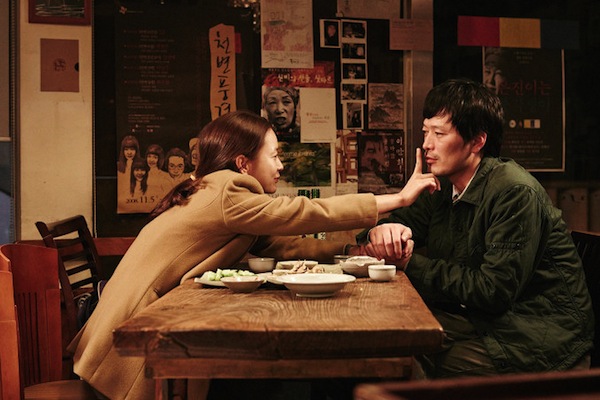
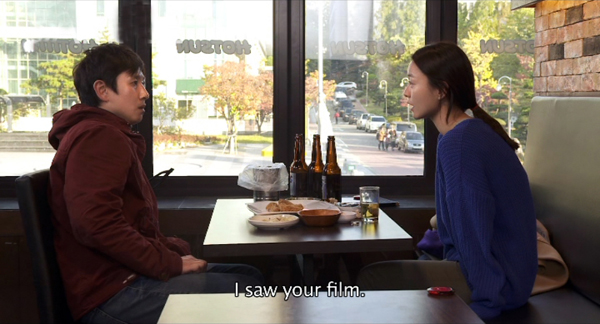
Our Sunhi is one of the looser ones as well. It is structured around a set of meetings between Sunhi and her three paramours: Sunhi and ex-boyfriend Munsu, Munsu and film-maker Jaehak, Sunhi and her professor Donghyun, Donghyun and Jaehak, Sunhi and Jaehak, and finally a variation which I probably shouldn't spoil. Every meeting will evolve into a sit-down, everyone but one involving copious amounts of alcohol, and everyone filmed in one-take. Small things are repeated, such as the same romantic song being played three times, both Munsu and Donghyun standing underneath Jaehak's window and calling up, and three of the meetings involving fried chicken. Also, and crucially, the same language is involved in these conversations, which mostly revolve around defining Sunhi.


The definition of Sunhi is the entire plot of the film: Sunhi has returned to her old film-making school, to procure a recomendation letter from her old professor Donghyun. The film is really, in a smart way, about a young woman trying to get an older man to tell her who she is. Munsu and Jaehak are happy to offer their own opinions as well, Munsu made a film based on his earlier relationship with Sunhi, and Jaehak seems as smitten as the other guys. And the same words are repeated in the descriptions: clever, reserved, brave, artistic sense. What develops is a drunken dance around Sunhi, but as we only hear the same stock phrases about her, she in the end becomes an enigmatic lack in the center. The problem is, obviously, that she only meets lovers or potential lovers, and is only defined by men. She doesn't talk to any other women - except one who only talks about chicken - and she doesn't define who she is herself. As such, it becomes yet another of Hong's examinations of the lopsided ways men and women relate to each other, the same as the rest of his films I've seen, and yet completely new and fresh.


I really, really liked this film. It's funny, insightful, and formalistic in an unobtrusive way. There are beautiful recurring shots of the sun through the autumn leaves, and the use of color on the main characters are really well-done, as can hopefully be glanced from the images. It's another good Hong Sang-soo film, and I can't wait to see what he has for us next year.

Our Sunhi is shown again Tue 4/8, 19:00

Free Range (Veiko Õunpuu, Estonia, 2013)


So after Our Sunhi, there was nothing on the program which was particularly interesting to me. So I decided to go for the one from Estonia. I love Eastern European cinema, but I've never seen an Estonian film before, and the program described it as cinematic 'chillwave', so I didn't really know what to expect. Turned out that, yeah, chillwave seems like an apt description. Like chillwave uses old and wobbly sounds to create a nostalgic and childlike image of the past, so did this film use 16 mm, manufactured 'splices' of mismatched pictures when the reels should connect, and old sounds to create something seemingly older than it is. Instagram was another thing that came to mind, the whole thing looked like the director had spent way too much time on Instagram. Or, with it's preternaturally beautiful young people, old soundtrack filled with Scott Walker and Pearls Before Swine, and beach parties around campfires, it all looked a film by Assayas, like Cold Water or Something in the Air.


Thing is, though, Assayas' nostalgic hipster-films actually takes place in the past. This film decidedly takes place in the present - in one of the first scenes, the main characters is fired from his job as a film-critic after he writes an explicit-filled pan of The Tree of Life, ending with: 'Fagotty God, why did you kill my son?' (quoted from memory). There are two reasons why the atemporality sort of works, though. The obvious one is that the main character lives in the past. The whole film is about him being forced to face the world and his future, as he is fired and finds out his girlfriend is pregnant. He wanted to be an artist, be a boheme, now he has to support a family. The stuntedness of the filmic language mirrors the stuntedness of the main character. However, I find that pretty uninteresting and klichéd, no one needs another film about an emotionally immature manchild. But the second reason is, that it's actually quite interesting how the nostalgia is subverted by the film being from Eastern Europe. When Fred and his friends are dancing to The Smiths and Scott Walker, they are not just mourning a past, they are mourning a past that never were. Towards the end of the film he says: 'Before, everyone lied, and everyone knew it. It was liberating.' This line seems very different, coming from an Estonian, than it would coming from someone from France. The film being Estonian also helps with what I consider one of the greatest klichés of arthouse film-making: The use of Arvo Pärt on the soundtrack. I mean, it's still cheesy to put under a fumbling sex-scene, but still, the composer's Estonian, it's not their fault that the rest of the film-world has driven the use of his music into the ground. And the second time the piece is used, when Fred wanders through town, downtrodden and defeated, the music manages to create a layer of societal decay over the images.


Also, it is quite simply beautiful music.

But in the end, the film cannot escape it's klichés. The biggest problem is a few of the supporting charcters. The girlfriend's parents are so over the top that half of it would still be way too much. And the co-workers Fred meets are unbelievably awful as well. It pretty much sinks a boy-vs-world film, when nothing in the world is portrayed realistically. And as much as the use of 16 mm creates an unusual look, the cinematography is not really strong and personal enough to overcome these issues. Except at the end. My god, the end. Here, the director lets loose with an impressionistic sequence of stunning beauty. The use of the city, the night-lights, and the intercut dream-like images: it's great, and what the entire film should have been. Also, not coincidentally, it's put to modern music, the Salem remixes of I'll Fly Away and Forever Young. This is modern filmmaking, the present repurposing the past, investigating it and reimagining it. If the whole of the film had been this good, it would have been a great film.

It's called Witch-house. Their album King Night is good, although this is apparantly from a mixtape.

Free Range is shown again Tue 4/8, 16:30

Goltzius & the Pelican Company (Peter Greenaway, UK, 2012)


Back when I was a pretentious teenager taking film-classes in high school, Peter Greenaway seemed like my kind of director. Postmodern, rigidly ritualistic, with numbers, riddles and stylised compositions. It seemed smart, and smart was what art should be. Then I saw his films... The Cook, The Thief, His Wife and Her Lover seemed okay, but it didn't seem that smart or rigidly composed. It seemed like typical eighties cinema. Some years later I saw Drowning by Number, the one I had had the highest hopes for, and I was completely underwhelmed. The problem seemed to me, that Greenaway wanted to completely create his own kind of universe, but cinema isn't really that malleable a medium, or perhaps Greenaway just wasn't good enough to form it. It all looked like eighties England, slightely askew. Dull and boring. As his style fell out of vogue, as I decided his powers had probably diminished with age, and as his name seldom came up in the film-press, he became part of the pile of directors I label 'well, someday...'


So colour me surprised: This was a quite good feature, with it's own sense of style that didn't seem like a deadend. It has me intrigued to finally check out the rest of the filmography. But I think digital cinema has been good to Greenaway, the image has become malleable enough. The film is filmed almost entirely in a gigantic factory hall, with ridiculously fake CGI to make it look at times like a dungeon or a meeting hall. Pictures in pictures abound, as an older Goltzius tells his tale of how he procured financing for a printing press from the Margrave of Alsace (F Murray Abraham, unhinged). Symmetrical compositions, mirrors, water and fire, words on screen, and a spinning wooden plate acting like a place for free debate and string concerts. It does not look like England. Effects even make it look at times like an old and parched painting, though the HD-photography remains crisp and hi-def. It is really fun to look at.


The plot is a mess, though. Based on the historical Hendrik Goltzius (1558-1617), who was famous for engraving erotically charged pictures, the story has him and his company acting out the six biblical stories they will later engrave, to amuse their potential benefactor. Stories like the invention of carnal sin, Lot and his daughters, the seduction of Joseph by Potiphar's wife, etc. It's kinda Porn by Numbers. These porn versions obviously stir religious debates at the famously liberal court, and it all becomes a mess of lust, torture, adultery, etc. Now, I've only seen two of Greenaway's films, but this seemed really familiar. The smart, religious men are dealt with in summerical fashion, Torture by Numbers. And the Margrave really seemed like the Thief, complete with sumptuous banquets and grotesqueries. It's all ridiculous, and we've all seen it before. Throw in some stupid accents and a copious amount of un-PC humour - as in keeping with the times, you see - and it does seem quite tired. Also, I don't think it says anything particularly thoughful on free speech, religion, sexual liberation, or anything. But still. The style is strong enough that I would recommend everyone to go see this stupid little curiosity. And I'm going to finally take that plunge through Greenaway's filmography, so that I'm qualified to say something more when his next film, on Hieronymus Bosch, comes out in 2016.

Goltzius and the Pelican Company is shown again Wed 4/9, 19:00 and Mon 4/14, 19:00.

Today I'm going to see Phillippe Garrel's Jealousy, and Sion Sono's Why Don't You Play in Hell. Hope to have something written up on them tonight. And if you made it this far: Thanks for reading, and have a splendid day!