Viser opslag med etiketten Western. Vis alle opslag

torsdag den 15. december 2011

Inglourious Basterds (2009) : Cynicism VI


This film isn't about the birth of a cynic. It is about the downfall of one. Which is actually a bit paradoxical. The setting of the film is World War Two, which could very plausibly be seen as the birth through victory of the modern / post-modern world. So if the cynic is the common person in the modern world, then a film about World War Two should logically show how the cynical side persevered over the old-fashioned fanatically ideological one. Yet Tarantino turns this one around. The most modern character in the film is by far Hans Landa, while the Allied 'Basterds' seem much more driven by ideology than him.


I've written earlier about the western, and how it is the essential genre to depict the birth of modernity. Tarantino uses motives from Western canon right from the first words of the film, as the name of chapter 1 is 'Once Upon a Time... in Nazi-occupied France' This is of course a play on the famous Sergio Leone film (or films, he made both ...the West, and … America) and the homage becomes even more clear as the first scene takes place, when the soundtrack contains a parody (or homage, or whatever) of the famous Morricone-music from The Good, The Bad and the Ugly. Except it includes fragments of Für Elise, to illustrate that Germany plays a part in this setting. That whole first segment is very similar to one of the first scenes in Once Upon a Time in the West, where a family on a secluded farm is massacred by gunmen as part of a conspiracy concerning the coming railroad. Yes, OUaTitW is a revisionist western, where the 'evil' forces are actually connected to the onset of modernity. And this film copies that. The German forces are evil modernity, and their enemies? Well, they are constantly connected to Indian imagery (I'm going to keep on using the politically incorrect word 'Indian', as the imagery the Allies draw upon is the cultural idea of Indians, rather than actual Native Americans). Aldo is called The Apache, the Basterds scalpel their enemies, and when Shosanna prepares for the great night, she puts warpaint on her face like the Indians do in the movies.


And it's like that throughout the film. The Germans are the modern ones, the Allied forces are pre-modern. Landa is, as I've mentioned, a modern Cynic. He doesn't care for truth, while speaking to the farmer he says: ”I love rumours. Facts can be so misleading, while rumours true or false are often revealing.” Later on he tells a long story about why he hates Jews, even though he knows it is an irrational hatred, by comparing it to the farmers irrational hatred of rats. Yet as he says: ”However interesting as a thought may be, it makes not one bit of difference to how you feel!” He is Cynical, he is self aware about his prejudices, yet he doesn't care. Aldo Raine on the other hand, is an ideologue. In his first speech to his men, he says: ”Nazi ain't got no humanity. There the foot-soldiers of a Jew-hating mass murdering maniac, and they need to be destroyed. That's why any and every sum-bitch we find wearing a Nazi-uniform, they gonna die!” Throughout the movie, the Germans are able and willing to play with other roles and personalities than their own, to indulge in that incredibly modern condition of split personality or schizophrenia. We see the German soldiers spending their free time by playing a game where they pretend to be someone else, and has to guess who it is. In some ways, personality can be put on your forehead, and taken away again. The Allied, on the other hand, can't play roles (except Indians or animals). They are rubbish at pretending to be German or Italian, and they don't like the German game. They believe that once a Nazi, always a Nazi, and they hate the thought that the role can be taken off with the uniform and hidden away, even though they mainly fight enlisted men. While the Germans put identity cards on their heads and take them off again, the Allies carve identity into foreheads with big knives.
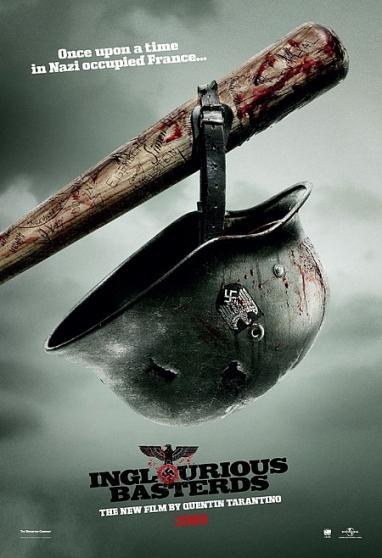


Most of the film consists of mind games between the Allied and the Germans. And every time both sides play fairly, the Germans win. Landa wins in the opening scene, the German SS-officer 'wins' in the scene at the tavern, and Hans Landa seemingly wins over everyone at the end. Every time there is a contest of intelligence, the Germans win, the only exception is the scene between Zoller and Shosanna in the projectors booth, which ends in a draw (and by the way, it's a funny view on man and woman. Shosanna tricks Zoller by pretending they are going to have sex, and then Zoller tricks her back by angling for pity. For men is libido and women is feelings.) The allied win by lying and being amoral. They trick poor Wilhelm into thinking that they will let him go, and they break every convention of war at the ending of the film. But throughout the film, they are losing. And when Aldo Raine has to utter his fake Italian 'Bonjornoh', it is almost pathetic (but the game is already over at that point. The point where Landa takes control is illustrated in a marvelously cinematic way, as Tarantino employs one of his beloved circular camera movements to circle Landa, von Hammersmark and the Basterds, and when Landa employs his fake laugh and shows that he has seen through the ruse, he takes a step back while manically laughing, yanking the camera out of it's course as he yanks the agenda out of his opponents hands).
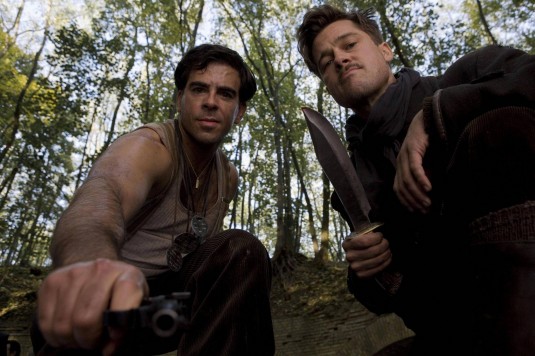


The implications of the film goes further, and is in my opinion quite political. The Allied concoct themselves as pre-modern Indians, yet today, when the film was made, they seem more like terrorists. In Aldo's speech, he exclaims: ”The German will fear us!” He could easily have said that they would be terrified. The Basterds torture there prisoners and they use suicide bombers. And the Germans don't know how to retaliate. In the end, the war is won through lies and terrorism. This seems quite controversial, to show the Allies as the schemers, and show Jews as terrorists, but Tarantino employs a few safety hatches, so to speak. First of all, he makes sure to show that Landa and Zoller is not just banal soldiers and administrators, though they claim to be. Both of them make violent motions towards women, and Landa even chokes von Hammersmark with his own hands, showing that they are in fact 'bad'. And Tarantino is not trying to say that Allied and Jews are equal to terrorists. He is trying to show how powerful fanaticism and extremism is. How powerful the extreme forces of the US would be, if they were as fanatical and willing to play 'dirty' as the opponents of 'Democracy' has traditionally been, from fascists to insurgents in Vietnam or Iraq. If we in the west would compromise (more...) on our principles, and could employ true fanaticism, we could easily win every war. But we should not. And we can't. We are cynics, and so, we have to slog through.

This film probably ain't a timeless masterpiece. For one, the digital coloring is horrible, it's focus on orange and teal will hopefully seem dated in a few years (and not just does this coloring make the pictures look samey after a while, it makes everyone’s eyes look deep blue. When you are making a film about the fight against antisemitism, employing a filter that makes everyone’s eyes look more Aryan really sends weird signals). But the 'value' of the film doesn't really matter to me. It really seems to comment quite profoundly on the problems of the Cynics in our society, especially with regards to warfare, in a pretty daring way. Plus, it's entertaining as hell.

Next week: We step away from culture and into the real world, but stay in the realm of Basterds, with Cynical Historian Niall Fergusson.

[Part I: Introduction and Mad Men]
[Part II: The Man Who Shot Liberty Valance & Police, Adjective]
[Part III: Brothers Karamazov and Melancholia]

[Part IV: Apocalypse Now]
[Part V: Inception]

onsdag den 16. november 2011

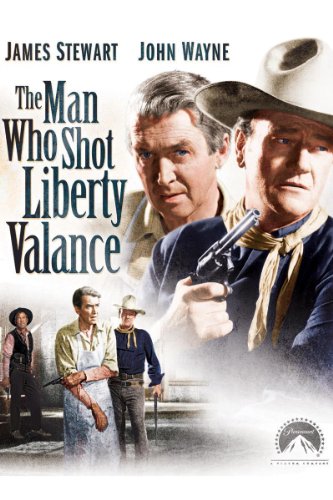
The Man Who Shot Liberty Valance (62) & Police, Adjective (09) : Cynicism II

Systems of Half-truths
Sloterdijk's Critique of Cynical Reason is a sprawling book. It's split up in two parts: Sightings: Five Preliminary Reflections, a long introductory section, and Cynicism in World Process. As with many philosophical works, you could probably read the introductory section and leave it at that... Part two discusses aspects of Cynicism in great detail, split up into Physiognomic, Phenomenological, Logical and Historical sections, but a lot of it is more examples of Cynicism and Cynicists than it is theoretical discussion. On the other hand, it does include thurough ruminations on the Kynical potentials of farts, genitals, Machiavelli, Judaism, Weimar Germany etc.

What I'm trying to get at this week is something I haven't noticed Sloterdijk discussing explicitly (but then again, I'm a blogger, not an expert on Sloterdijk), but which he seems to get at in the parts on the Phenomenological and Logical Cynicisms. These parts are concerned with how cynicism is used in governing institutions and with the knowledge and half-truths these systems use to uphold themselves, respectively. And these two parts go through subchapters on the military, the government, sexuality, medicine, the church and knowledge-gathering institutions in the same order (I'll get into a few of these subchapters in later weeks). My point is, that it would be wrong to take a simplified look at our society today, and simply say, that it is upheld by an ideology, and in the chasm between that ideology and the real truth it where cynicism is born. No, there isn't a simple cynicism in our society (as a matter of fact, what would probably be seen as reaction to the foundational ideology of our day is called Exchange Cynicism by Sloterdijk, and he only sees it as important enough to count among the 'secondary cynicisms'). There are a multitude. If anything, cynicism is rather born out of the chasm between the need to hatch oneself to a subsystem of society and it's selflegitimizing half-knowledge, and our understanding that this sub-system of knowledge is just one amongst others, with no objective way of deciding which truth-system is actually true in different situations. It's not a way of reconciling lie with truth, but rather half-truth with half-truth.

To discuss these themes, I'll go through two films. The first one is The Man Who Shot Liberty Valance from 1962 by John Ford, and it chronicles the establishing of American Cynicism. The other one is Police, Adjective from 2009 by Corneliu Porumboiu, which is concerned with Cynicism in post-communist Eastern Europe.

Pre-Ideology: The Man Who Shot Liberty Valance (62)

When I thought about doing some posts on Cynicism, this film imediately came to mind. Mostly because of that famous final statement: This is the west, sir. When the legend becomes fact, print the legend. As such, it seemed like a perfect example of how the ideology of the American nation is based on Cynicism. Some might think, that the film shows how a young honestly idealistic lawyer has to succumb to lying to establish his carreer, but it's not that simple. I'll try and show how Ransom Studdard is actually throughout the film an avatar of half-lies and ideology, and the film more shows the world accepting the lie, rather than creating it. Rather than being a film about the creation of ideology, it is, in fact, a film about the creation of Cynicism.


Studdard goes to the West because of ideology: He tells us that he had taken Horace Greelys advice 'Go west young man, go west. And seek fame, fortune, adventure' We hear this in voiceover at the beginning of his flashback, and it is imediately juxtaposed with the actuality of the west, as his stagecoach is held up by masked gunmen. We learn that Studdard is a student of law, one of those systems of halftruths I've just written about. As Liberty Valance rips out the pages of his lawbook and says: 'I'll teach you law. Western law' we get a summation of what the persons represent. Studdard is truth as it should be. Liberty Valance is truth as it is. That Studdard isn't representing truth is perhaps most clear in his dicussion with Hallie about the Cactus Rose she has just been given by Doniphon. 'Isn't that the prettiest thing you ever did see?' 'Yes, it's very pretty... Hallie, did you ever see a real rose?' 'No. But maybe someday, if they ever dam the river, we'll have lots of water. And all kinds of flowers' The irony comes from Studdard dismissing the rose in front of him as 'unreal', and calling a dream-rose located somewhere else, or somewhere in the future, the actual real rose. Studdard seems to think that his world, the world of the big city, a civilized world of law and democracy, is truth, and that the Western world he is in is just a temporary deviation from the world as it should be. When Studdard begins teaching a small class, his lessons seems to be mainly concerned with getting the students to repeat exactly what he believes in. Nora answers: 'A Republic is a state in which the people are the boss. That means us.' There is also a pretty on-the-nose comment on American history when Pompey, who is black, can't remember the part of the Declaration of Independence that goes 'All Men are created equally' prompting Studdard to reply: 'A lot of people forget about that part'. On the nose, but probably quite progressive for 62. And it shows that even 'self-evident' truths could be bended in the history of America.

What the film never forgets is, that in a democracy, truth and right is contested and ever changing. To begin with, Studdard admits that the marshall of Shinbone probably can't do anything about the hold-up, since it is a territorial offence. But his lawbooks says that in fact the marshall can arrest Valance when he returns to town. That the marshall in reality can't arrest him, since Valance would shoot him down, is not something Studdard realizes. He takes the Law as right, more than the world. The plot of the film revolves around the decision of whether the territory Shinbone is located in should become a state or not. The big ranch-owners want to remain a territory while the little people want to attain statehood, with the order that would come from that. We instinctively root for the downtrodden majority, but the film reminds us, that not just the ranchers but also the Native Americans want the area to remain open and ungoverned. Who is actually right in this question? And yet, it's not just democratic votes that determines this question. The clearest example of this is of course the shooting of Liberty Valance, and how the resulting legend influences the carreer of Studdard, but before that, in the scene in the town-hall, Studdard acts very undemocratically, when he reads out the names of himself and Liberty Valance quite normally, and then enthusiastically reads out the name of Peabody.

Throughout the film, Studdard is an ideologue. The film is not the story of the creation of an ideology to ground the creation of the nation. It is the story of the creation of a conscious exploitation of this ideology. It is about the establishment of Cynicism in America.

Post-Ideology: Police, Adjective (09)
The way American Westerns seem to be the primary group of films to grapple with the creation of American Ideology, in the same way the new wave of Romanian Cinema seems to me the primary group grappling with the dis-mantling of Communist Ideology. While none of the directors are as brilliant and singular (at least as of yet) as a Sokurov or a Tarr, precisely the singularity and personality of these two great auteurs means their works work on a more abstract and diffuse level. Romanian cinema, on the other hand, seems quite concerned with Romania.


While I just assumed everyone would have a basic idea of the plot to John Ford's western (it's pretty much in the title), it's probably in it's place to present a small recap of this kind of obscure film (spoilers of course). Cristi is a policeman working in a small Romanian city. He has just returned from his honeymoon abroad, where he has seen how the law is different in other countries, and it makes him question the rules he is meant to uphold. He has been assigned to a case concerning a young man who apparantly deals marihuana, but Cristi suspects that his witness is accusing the young man for personal reasons, and he fears that the punishment of the young boy would be disproportionate to the crime. The film mostly just follows Cristi. Not just as he stands around watching the young man and his friends, but also in his home, where he eats a dinner by himself one night, and another night discusses a song with his wife. In the end, Cristi is called into the office of his boss, where he expresses his concerns that an unjust law of society shouldn't trump his own feeling of a 'moral law', and is forced by his boss to read the definition of several words in a dictionary, none of which provides any proof for the importance of 'moral law'. After that, the arrest takes place off-screen, and the film ends. It is a very slow film, but also very riveting.

The reason I thought of this film as a companion to Liberty Valance, is the way both films are concerned with books and rules and law. In the scene where Cristi and his wife discusses the song, Cristi claims that the lyrics doesn't make sense, while his wife sees them as making sense on a symbolic or imagery level. She can't really choose. Here we get the discussion of whether language should be stringent and bound by common rules of meaningmaking, or if a subjective and sorta artistic (I'm not sure I would describe the very kitschy lovesong as 'art'...) can reach a more profound truth, sorta the same discussion I noted in Solaris. Yet the differences between this film and the Western mirror the differences between democracy and authoritarianism. While the key scenes in Liberty Valance is the ones where we see how the characters use and bend the voting system to their advantage, the key scene in Police Adjective is the one where Cristi is being forced to read out the definition of words. As I said, in democracy, truth is contested, while in an authoritarian system, it's decided from on top. Even when Studdard references laws that are bigger than his surroundings - as he does when they discuss whether or not the hold-up was a territorial offence - he does so in a searching and inquisitive manner. In Police, Adjective, Cristi's boss Captain Anghelache uses the authority of the book to support his authority as a boss.

The cynical moment in the film is where the film gets it's title. As Cristi reads about Police, he gets to the two uses of Police as an adjective: The Police Novel (as it's apparantly known in Romania) and: About police states or regimes which are supported by the police and which exercise control through repressive methods' This, however, immediately prompts Anghelache to reply: 'Ridiculous! All states depend on the police' Through this reply, he suddenly admits that the book could be wrong, yet this admission doesn't make him change his stance on the arrest. This is authoritarian Cynicism, where the tyrant know full well that the rulers has stopped serving the law, and instead uses the law to serve the rulers themselves.

So to sum up: Cynicism is not just usable to explain how big ideologies like Liberalism or Communism can continue to function. It also helps to overlook more structural issues. In a democracy, truth is contested and subservient to the views of the majority, while in an authoritarian system, truth is subservient to the views of those in power. The Cynicist realizes this, yet he continues to believe in his place in the system.

Next week: Pedagogy as a possible example of benevolent cynicism. With Dostoyevsky's Brothers Karamasov and Lars von Trier's Melancholia.

[Part I: Introduction and Mad Men]
[Part III: Brothers Karamazov and Melancholia]
[Part IV: Apocalypse Now]
[Part V: Inception]
[Part VI: Inglourious Basterds]