Viser opslag med etiketten Russia. Vis alle opslag

lørdag den 8. november 2014

CPHDOX day 2: Battle for Ukraine, The Postman's White Nights, Monsoon

That Andrei Konchalovsky would have two films at this years DOX-fest would probably come as a surprise for many film-lovers a few years back. The 77-year old director of the Sylvester Stallone / Kurt Russell buddy-cop feature Tango & Cash has had quite a carreer, working on Tarkovsky's early features like Andrey Rublev, but he hasn't made that much noise recently. He got some kind of a comeback earlier this year, though, at the Venice Film Festival, where his The Postman's White Nights got much positive attention, was a favorite to win the big prize for a moment, and ended up winning the Silver Lion. I watched both of his films today.

Battle for Ukraine (Andrei Konchalovsky, Russia, 2012)

First up was this documentary from 2012. Just looking at that title, there should be little doubt as to why this film would be interesting this year. But of course, being two years old, this doc does not offer any insight into what happened at Maidan and afterwards - for that, I'm hoping Loznitsa's Maidan can live up to the hype. Watching this film, it's not hard to see why it wasn't included at the fest earlier. It's not a particularly special film, and it sorta seemed to be part of a series of documentaries, perhaps made for tv. The visuals are plain, the truckload of guests are filmed talking to the camera, often in front of a bluescreen playing visuals connected to what they say. It's all well and good and informative, but nothing special.

What was really interesting, though, was to see how the recent Battle for Ukraine has changed not just the present and the future, but also the past. There is a bit of grim humor when we reach the Budapest Agreement of 1994, where Ukraine gave up it's nuclear missiles in exchange for promises that neither US or Russia would ever attack the country, and a talking head says that they gave up their missiles in exchange of nothing, really. Yup, that seems about right nowadays. But in general, as the film concludes with the Orange revolution in 2004, it seeks it's explanation of this Battle for Ukraine in the long run-up to that crisis. It surprised me how little I knew about that. After Maidan, the stories of Ukraine I've seen always now begin with the Orange revolution, and the resulting divide, they don't climax with it.
Kuchma and Konchalovsky

But this film does, so the main part of the film is the story of Leonid Kuchma, President of Ukraine 1994-2005. The man who brought the country out of the economic crisis that followed independence, and was a hero to the nation. But who then became a different president after his reelection in 99, in the words of a talking head taking the country from 'weak democracy to autocracy'. There is a scandal where the bodyguard Mykola Melnychenko bugged the president's office and released tapes of Kuchma aproving sales of radar-systems to Saddam Hussein and perhaps even approving the murder of journalist Georgiy Gongadze. There was the ostracizing from the west, as George W Bush's USA wouldn't want anything to do with a country selling systems to Iraq on the eve of the second war, and Kuchma's following turn towards Putin. The film includes talking heads from all over the political spectrum, who points fingers in every direction, so it also becomes clear just how much the political scene changed at the turn of the century, as Putin followed Jeltsin (who is also in the film, mainly being a drunk fool) and Bush II followed Clinton I. And Kuchma II followed Kuchma I. I wonder how many other important national elections one could point to in those years. We think of 9/11 as having changed everything, but there was a new guard of more agressive politicians, who'd gotten elected earlier than that. I wonder what kind of silly drug was in the air, to make it all happen. Anyways, this was an informative doc, that made me a lot more knowledgable on one of the defining conflicts of our age. So that was ok.

The Postman's White Nights (Andrei Konchakovsky, Russia, 2014)

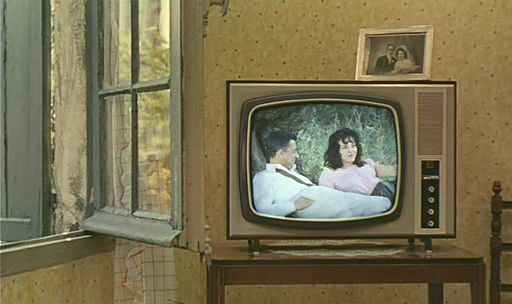
But I'll admit that this kind of thing is more to my liking. This is hardly a documentary, though it's filmed with amateur actors, and does give an idea of life at Lake Kenozero in Arkhangelsk. It follows a postman called Lyokha (which I'm assuming is short for Aleksey, since that name is in the Russian title, and is also the name of the actor) who travels around the lake, carrying suplies for the elderly villagers, being lonely, keeping his sobriety going for two years now. He fancies his old schoolmate Irina, but has more of a connection to her young son Timka. That is basically the important strokes in this film.


I love the visual style of this film. Shot on digital, using natural lighting. And the light in Arkhangelsk is quite incredible, especially during those white nights. To help the non-professional cast, Konchakovsky often hid the camera in dialogue scenes, which gives the film a special guerilla look, which reminded me a bit of Tsai Ming-liangs very, very great Stray Dogs. Other films focusing on non-professionals on the fringes of society, with this kind of visuals, and even this films weird mix of most mundane everyday with light surrealism include the work of Apichatbong Weerasethakul or even Pedro Costa. So yeah, this film is part of a group of film, which in my view are the most important thing happening in world cinema so far this decade. And therefore, it is obviously very much worth watching. But, well, if it's part of that club, then it's pretty clearly the least overwhelmingly masterful. It's fine. It's delightful. But it's no Colossal Youth or Uncle Boonmee who can Recall His Past Lives.


But perhaps it's more mainstream, perhaps it could aclimate the audience to this style? That would be great. Godard once said that to make a film you need a girl and a gun, and great artfilms were made on that premise. But today, I feel that if you want to make a popular arthouse film you need a kid and a cat. And this film has fine examples of both. Timur Bondarenko gives a great performance as young Timka, especially in a scene where Lyokha takes him on the lake to find a witch. And the cat! The cat is the most amazing cat I've seen in a long time. It's a mystery cat, a special effect. Every white night it's there, and then it's gone again, and it's very surreal. Not because of any cgi or other effectery, but because the cat is so striking with grey fur and piercing yellow eyes. That cat alone is worth the prize of admission, that cat will have you talking for days, that cat could play Behemoth in an adaptation of The Master and Margherita. It might even be a reference to that novel. As in Bulgakov's masterpiece, the buildings are emptying of people (though through people leaving the desolate villages rather than through purges), and weird things are going on. The weirdness also includes the local drunk The Bun, who all of a sudden has his own scenes where he rambles in the darkness about visitings from the other side, and another shock in the second half of the film is Lyokha and Timka leaving the countryside and going to the city, all of a sudden introducing malls and even a missile factory into the film. It's weird like that. I really, really recommend this film, though it's not a masterpiece. A Silver Lion seems about right.

Monsoon (Sturla Gunnarsson, Canada, 2014)

I don't really want to dismiss this film, it's not bad, but I definitely feel like I was promised much more than I got. The programme promised a 'breathtaking film' 'shot in 4K' whose 'visuals are nothing short of overwhelming', adding up to a 'transcendental film experience of the really rare kind' and a 'film that leaves you with a feeling of having looked at our little planet from an almost cosmic perspective.' What I got honestly felt more like a BBC-Nature Special. I just realized 4K can really make me think that it would look good on bluray on my hi-def telly. And there were way too many talking heads.

I guess a 'promo' is different from a trailer, because there are many things in this clip which wasn't in the film, including those bloody elephants!

The film focused on the people. The inhabitants in the south, living on ground below sea-level, protected from the rising water by feeble levees. The fishermen of Goa, having to put their lives in danger by sailing out during the storms. The farmers in areas hurt by drought. The animals of the national parks, being forced to higher grounds filled with lurking poachers. A bookie betting on whether or not a day will bring rain. It was all very fine and thougtful, showing water as life, but also as danger. There were no transcendental visuals, though. The slow-mo rain-passages were ok, but the music was kitchy techno with indian vibes. A fine documentary about the forces of nature, but I still feel cheated. Just a bit.

Just to be clear, I'm just teasing. I've written these kind of festival blurbs as well. And I wrote stuff where people afterwards said 'Really? Lifechanging?'. It happens.

onsdag den 23. november 2011

Brothers Karamazov (1880) & Melancholia (2011) : Cynicism III

Now, about Kant. The only work of Kant I own is a small book, bought used for 3.50$, that contains Foundations of the Metaphysics of Morals & What Is Enlightenment, and admittedly, I haven't even finished reading this one. Now, of course the juxtaposition of these two works were made by an editor and not by Kant, but it is still a bit weird to put these two books together. In What is Enlightenment (from 1784) he begins by stating 'Enlightenment is man's release from his self-incurred tutelage. Tutelage is man's inability to make use of his understanding without direction from another.' But already the next year (1785) he is writing a book trying to make a foundation for telling people what to do... I have no doubt, that Kant himself has probably written about this contradiction somewhere, but it is still one of those contradictions that runs through a lot of socalled Enlightenment Philosophy. They want people to think for themselves, and then they promptly tell people how to think. There is something weird about a philospher condemning people for thinking 'I need not think, if I can only pay - others will readily undertake the irksome work for me.' (all quotes are from page 85 of Foundations of the Metaphysics of Morals, McMillan, 1959. An older translation can be read here) The philosopher, who truly wants people to think for themselves, wouldn'd he be quiet? Wouldn't he withhold his knowledge from others, to force them to figure it out for themselves?

This week, I want to talk about whether or not cynicists believe people can and want to think for themselves. And then I'll discuss children, and whether or not our society believes they should be allowed to think for themselves. To do that, I'm going to talk about Dostoevsky's great final novel Brothers Karamazov from 1880, and Lars von Triers latest movie Melancholia.

Dostoevsky's Brothers Karamazov (1880)

Brothers Karamazov is completely central to Sloterdijk's argument in Critique of Cynical Reason. In chapter 7 called Cabinet of Cynics, Sloterdijk takes a look at 5 cynics from throughout the ages. These five are Diogenes, the original Kynic, Lucian the Mocker, who is used as an early example of a cynic on the side of the powerful, Mephistopheles from Goethe's Faust, The Grand Inquisitor from Brothers Karamazov, and finally the Anyone as used by Heidegger. Sloterdijk uses The Grand Inquisitor as an example of a powerful figure, who has begun withholding the truth from the people, because he believes that the people can't handle it. The figure is from a short story told by the middle brother Ivan, and it can be read here, where Jesus returns to Spain in the 16th century, right in the middle of the Spanish Inquisition. The Grand Inquisitor has him arrested and confronts him in his cell. He says that Jesus failed the people, as he was too perfect a human being so that the people could never follow his example, and he claims that the people abhor that Jesus wanted them to belive in him freely. The Inquisition has returned the amount of force back into religion, that the people deep inside really want. Sloterdijk says that the inquisitor speaks like a conservative politician after the French Revolution, when he says things like this 'They will tear down the temples and drench the earth with blood. But they will realize, the foolish children, that although they are rebels, they are impotent rebels who cannot bear their own rebellion' (p 185 in Sloterdijks book)

Sloterdijk mentions that he just uses these characters as figures, as symbols, and that he doesn't care that he might have taken them out of a context. But still, I find it interesting how Dostoevsky treats this theme towards the end of the book. Now I'm not going to spoil the end of the actual plot of the book, but there is a young character who is called Illusha and who is already dying when he is introduced, and the final chapter takes place at his funeral (but be careful reading it if you haven't read the book. It talks a bit about the resolution of the plot in the beginning). Alyosha, the youngest brother and the main character of the book, goes to the funeral along with a lot of young boys, who in the book is simply called the Boys. A lot of the book has been religious discussions between the three Brothers, like the chapter on the Grand Inquisitor, but in this final chapter we see how the discussion about religion is important to young people in their darkest hour. The boy who talks the most is called Kolya, and he has before claimed that he doesn't believe. Throughout the book he seems like a future Ivan, the learned and modern and almost nihilistic atheist. And yet, at the grave of his good friend, and spurred on by a preceding speech made by Alyosha, he suddenly cries out:

"Karamazov," cried Kolya, "can it be true what's taught us in religion, that we shall all rise again from the dead and shall live and see each other again, all, Ilusha too?"

"Certainly we shall all rise again, certainly we shall see each other and shall tell each other with joy and gladness all that has happened!" Alyosha answered, half laughing, half enthusiastic.

"Ah, how splendid it will be!" broke from Kolya.


To me, this almost legitimizes the Grand Inquisitor to some extent. This young boy has througout the book tried and taken pride in thinking for himself, and yet, when confronted by the true horror of life, he wants to be comforted by an older and presumably wiser man. Even though there really isn't anything convincing in Alyoshas answer, his authority, and Kolyas wish to believe in it, makes it true for him.

Lars von Trier's Melancholia (2011)


In the writings I have read about this film, no one has really mentioned how Dostoevskian parts of this film actually are. We have the scandalous wedding in the first half, a kind of scene that happens again and again in Dostoevsky's stories, like the first meeting of the family in Karamazov, Sonya's father's funeral in Crime and Punishment, the birthday party in Notes from Underground, the wedding in A Nasty Anecdote, etc. Also, the first part of the film could be seen as trying to achieve the kind of Dostoevskian Polyphony as described by Bakhtin. So many characters seems to show aspects of the question of: Freedom to do what you want vs the obligations you have to the rest of the world. Justine is going to marry Michael, and she gets depressed by having to do all the things at the wedding that everyone else expects of her, including her husband. Both of her parents has stopped thinking about what others think of them, as they are both getting closer to death. And Jack, Justines boss, is so wealthy and powerful, that he has stopped doing what anyone expects of him, and can't comprehend that anyone might want to do anything other than what he expects of them. The point of the film then, becomes that the planet Melancholia (and just death in general in the case of Justine and Claires parents) frees everyone from the expectations of society, as society is about to end, freeing the people who were depressed by expectations, and depressing those who actually did well in society.


But admittedly, the second - and much more problematic, in my opinion - half stops being so Dostoevskian. The amount of characters is reduced to three, and instead of being ways of commenting on a theme, von Trier focuses instead on an actual psychologically true depiction of Justines depression, which I find clashes with how unreal she acts in the first part. And also, the second part seems much more focused on all the obligatory things that must happen in an apocalyptic movie. If the film had jumped from the scene where Justine is sitting alone on a table, left by her father who chose not to be there for her, just as she chose not to be there for Michael, and to the scene where the planet actually hits the earth, it would have been a masterpiece in my opinion. But Dostoevsky and Brothers Karamazov come roaring back at the end. As both Claire and Justine realize that they are going to die, Claire breaks down and asks Justine that they do something 'nice' with their final moments, like sitting on the terrace and drinking a glass of wine. Justine calls this plan a 'piece of shit'. They are going to die awfully, and they should be honest about it. Then she goes outside and sees Claires frightened son. Immediately, Justine begins lying to the young boy about what is going to happen. They are going to survive, because she can make a Magic Cave. This is once again benevolent cynicism. Justine knows it's a lie, and she refused to perpetuate this kind of lying when an adult like Claire asked her to, but confronted with a young child, Justine begins lying again.

So would the world be a better place without cynicism? Would anyone tell the truth about the horrors of the world confronted with a young innocent child? The Grand Inquisitor, Alyosha Karamazov, Justine, they are not completely alike, but their differences are more like graduations on a scale. Alyosha and Justine treat children like children, to allow them to be young and innocent in a horrific world. The Grand Inquisitor treats everyone like children, and should according to Sloterdijk allow the rest of the world to grow up. But really, it's kinda the same impulse, isn't it?

Next week: Military Cynicism and Apocalypse Now: Redux


[Part I: Introduction and Mad Men]
[Part II: The Man Who Shot Liberty Valance & Police, Adjective]
[Part IV: Apocalypse Now]
[Part V: Inception]
[Part VI: Inglourious Basterds]

torsdag den 20. oktober 2011

Tarkovsky - Solaris (72)


This is a translation of an old piece I wrote on Solaris. It's just a sketch for a reading of the film, it is in no way extensive. It might be idiosyncratic, it might be obvious. I have a feeling Tarkovsky himself wouldn't have liked the focus I'm choosing. But I think it makes sense. And I've spend a lot of time with Eastern European culture recently, and I think about the same themes and problems with a lot of it. So I'm going to talk a bit about Eastern European culture at the end. But first: Solaris. Spoilers of course. I'm not going to write a synopsis, that can be found at wikipedia.


I really like this trailer. Makes the film seem like an actionmovie, which is quite the acomplishment...

There are three scenes in Solaris, where the characters sit down and watch a film-in-the-film. One of them is Kelvin watching recordings made by his old friend Gibarian. I'm not going to talk about that one, but focus on the two other ones. The first important - for my argument - instance of filmwatching takes place from ca 10:19-23:40. The pilot Burton has come out to Kelvin's cabin, to show an old recording of an investigation. The young Burton is asked about what he saw on Solaris. The interesting detail for my argument is the way the scene is filmed. It seems to be some sort of futuristic automatic camera. Every time another person speaks, the camera cuts to a new angle and a small 'ping' is heard. The camera always tries to catch the person in the middle of the frame, and in mid-distance. This is an official recording, of an official investigation. I will take this as an attempt of an 'objective' observer. The camera also mirrors the content of the scene, where Burton's claims that he saw it all 'with my own eyes' are brushed aside as the objective camera on the plane doesn't support what he's saying.

The second scene occurs from 19:19-21:45 of my two disc version. Kelvin sits down and watches old films with the new version of his wife Hari. It is old homerecordings of Kelvin and his family. The camera zooms in and out and moves about. The people in the picture stare awkwardly at the camera, and you can easily feel the connection between 'observer' and 'observed'. I will take this camera as an example of a subjective observer. In the last part of the movie, we see the old, dead Hari in frame, and we realize that the new Hari has been constructed out of Kelvin's memories of these old films.


In a key scene from 27:12-29:50 we find Burton and Kelvin discussing the mission to Solaris. In this scene, we learn how Kelvin views science pre-Solaris. His view is that science should be done without involving feelings. It should be done by objective observers, the ideal would be automatic observers such as the cameras in the clip from the investigation. The discussion makes Burton leave in anger, while he yells that Kelvin is an 'accountant, not a scientist'. In my reading, the rest of the film describes how Kelvin the accountant has to reevaluate his views on science because of his confrontation with Solaris. Hari and the other constructs therefore symbolizes the subjectivity of the scientists, which in the end inevitably affects there work. At the end of the film, Solaris agrees to stop making constructs aboard the space station for some reason, but does this mean objectivity is possible? If that is the case, then Kelvin turns his back to it, and ends the film on an island on the planet, in a construct of his childhood home. But what are the implications of this turning the back on objectivity? One the one hand, it could be said to weigh subjective art higher than objective science, and every one of the deeply personal and uniquely Tarkovskyan shots of the film supports this view, as does the long takes dwelling over the art of Brueghel and others. But what about the context of Soviet 1972? Isn't Marxism built upon an attempt at an 'objectively scientific' model of history? If so, you could say that this is a fundamentally anti-Marxist film. Not because it's against Marxist ideology, but because it attacks the attempts at making objective foundations to build an ideology on. If Solaris talks against objective science in general, doesn't it then contain a multitude of social and political implications? Isn't it then a deeply political film?


But there are many problems with this explanation of the film. For instance, most people will probably see Hari as much more than just a symbol of subjectivity, she is too rich a character to be reduced to that. Furthermore, Tarkovsky himself would probably be very much against this reading of his film. He was against symbols, and he was against focusing too much on social and political questions. But let's look at Hari for instance, why can't she be reduced to a symbol of subjectivity? In my mind, it's because the film is so focused on how Kelvin percieves Hari. She is a symbol, but she is also Kelvins wife, and the film is much more focused on this personal relation. This is typical for a film by Tarkovsky, they are usually concerned with the personal consequences of situations. In Ivans Childhood, the horror of war is depicted through how it affects a single child. In The Mirror, the war is only shown through the memories of a single man. And in The Sacrifice, the end of the world depends on a very personal relation... Tarkovsky focuses on humans beings, not on society as a whole. But that doesn't mean he cannot be seen as being political. It says more about how primitive political discussions often become. Apparantly, Italian Marxists criticized Ivans Childhood as being too bourgois in focusing on the tragedy of one. But what value has politics if it isn't concerned with bettering life for singular human beings? For me, a huge part of the point of left-wing politics is in pointing out how liberalism so often devolves into freedom for a few individuals, at the cost of less freedom and more pain for the vast majority of people. Yet very many left-wing people seem to forget this at times. Tarkovsky is political at times, but he never treats politics as abstractly as so many politicians does. No matter how abstract he can be - and he can undoubtedly be very abstract - it's always rooted in people.


And I have similar problems with how people view a lot of Soviet/Easterneuropean artists. From the films of Tarkovsky and Tarr, to the theoretical writings of Mandelstam or Bakhtin. People are understandably wary of putting too much of a political framework over their works, but a lot of their stuff has wideranging political implications. A huge part of the problem is, that the context they were created in / are occupied with, was so primitive and simplistic. The only proper (or allowed) political response to Stalin and the Soviet Dictatorship was praise back then, and is condemnation today, so the space for artistic expressions is quite narrow. If you say that a piece of art from this context is political, people would think that it means that they are concerned with their political context. Yet Bakhtin's writings has a huge antiauthoritirians potential, which cannot be reduced to him being against Stalinism.
So while I completely understand why people wouldn't want to let this stuff be 'infected' by their contemporary context, perhaps we're so far removed from that context today, that we can take the discussion of political and social implications of Soviet/post-Soviet art on another level? The thing is, exactly because this art is working on a more fundamental level than just critiquing its day, it's still relevant today. Solaris for instance: Is it possible to observe the world from an objective position? Or will every observer also see the ghosts of his/her past? Is the objective position even preferable? Doesn't the subjective camera that Tarkovsky uses give is a fundamentally deeper understanding of what goes on, than the objective camera used in the interrogation scene. It's fundamentally philosophical questions, and that Tarkovsky focuses on how these questions has consequences for a single human being does not mean, that these questions aren't important in a larger context.

mandag den 9. maj 2011

Agnes Varda's Le Bonheur + Thoughts on Women in Art


Sometimes you see something and a few thoughts seem to fall into place. Or at least into place a bit more. I saw Agnes Varda's film Le Bonheur from 65 last night, and it seemed to fit like a piece of a puzzle I've been trying to put together, on the topic of feminism, women artists, and the like. I've been trying to figure out this kind of thing for a long time, and jotted down several quotes from different places that I find helping. So this is mainly a bunch of pretentious quotes strung together into a half baked political framework, that in the end is probably still severely lacking, and only intended to absolve myself for my lack of activism in this regard. Nevertheless, it is nice to try and think stuff like this over from time to time, and a good thing about a blog is that it allows oneself to air thoughts that one haven't really resolved sufficiently, and that one might abandon in due time. Anyways, here they are. Spoilers, of course.


Talk talk talk. And then the scene in question from 7:00 onwards. Two unforgettable inserts at 8:30...

The thing that triggered these thoughts is the ending of the film. While relaxing in a park, Therese has heard that her husband Francois has begun an affair, an to begin with she seems to accept his explanation, that his actions has only made him happier and that this happiness has made his love for her even greater. But then, while he takes a nap, she wanders of and drowns in a pond. I deliberately don't say that she drowns herself, for the film seems a bit ambiguous on this point. A short shot shows her in the water, grasping at a stick, perhaps trying to stay above water. The ambiguity, and the shot where Francois holds the drowned Therese in his arms, reminded me of the fate of Ophelia from Hamlet. And immediately afterward, it reminded me of this poem by the Russian poet Anna Akhmatova, named Reading Hamlet:

A barren patch to the right of the cemetery,
behind it a river flashing blue.
You said: ”All right then, get thee to a nunnery,
or go get married to a fool...”

It was the sort of thing that princes always say,
but these are words that one remembers.
May they flow a hundred centuries in a row
like an ermine mantle from his shoulders.

(from the collection Poems of Akhmatova from Mariner books, translated by Stanley Kunitz and Max Hayward. Go find it on Amazon, it is really, really good...)

Akhmatova wrote a few of these poems, about women who gets lost in the struggle of men, such as Lots Wife who turned into a pillar of salt (Who will grieve for this woman? Does she not seem / too insignificant for our concern?), or Cleopatra (Tomorrow they'll put her children in chains...). As a Russian artist in the first half of twentieth century, she was of course a target of the Stalinist purges. But she was never hurt herself, her ex-husband was executed and her son was interned. She is very famous for the poem Requiem she wrote about her experience as the mother of a deportee. It begins with something Instead of a Preface, in which she is recognized standing in line outside the prison in Leningrad, and another woman asks her: ”Can you describe this?” / And I said: ”I can.” / Then something like a smile passed fleetingly over what had once been her face”


The French postmodern philosopher Jean-Francois Lyotard began his work The Differend with a rumination on the then new phenomenon of Holocaust deniers. As he described their solipsistic argument, the only proof of the Holocaust they would except would have been someone who could prove that the gas chambers had been used to kill people. And since everyone who had witnessed the gas chambers in function had died from it, this could not be proved, and ergo Holocaust could be denied. He used this extreme example to, amongst other things, draw a distinction between a plaintiff and a victim (in §9 on page 8 of the English edition from Minnesota University press). ”A plaintiff is someone who has incurred damages and who disposes of the means to prove it. One becomes a victim if one loses these means.” It is to remain a plaintiff and not become solely a victim, that the woman in the line in Leningrad asks Akhmatova if she can describe this wrong that are committed against them, if she is able to bear witness to it. By giving voice to victimized women from the past, Akhmatova also tries to turn them into plaintiffs. As a plaintiff you still have hope for revenge, or recompense. Once your a victim, that hope has been taken from you.


But of course, the question remains: Could Akhmatova really describe these wrongs? Don't get me wrong, it is a magnificent poem, a masterpiece even, but can we be sure she actually described the feeling of this other women? Can we be sure that she captures the feelings of Ophelia or Lots Wife (disregarding the fact that they are constructs...). Is she not, in a small way, perhaps doing them another wrong by using them to make her own description stronger? If this woman from Leningrad perhaps had written her own account, it would probably be disregarded, for it is inconceivable that it would ever be as brilliant as Akhmatova’s Requiem. Another extreme example is Dante and Beatrice. Beatrice is immortalized in Dante’s Divine Comedy. She is described as the most perfect woman ever, who is sitting almost next to God and Christ in the highest realm of Paradise. But has Dante immortalized Beatrice, or has he removed the actual woman from the annals of history, and substituted her with his own cleansed picture?


And this brings me back to Varda's film. For while every person in the film seem inherently sympathetic, Francois, the adulterer, has at least one major fault. He talks. He talks and talks and talks, yet he never really listens. He perpetually tries to explain his own acts and feelings, but never wants to hear anything about anyone else. And Therese doesn't tell him. She just wanders off, and then she drowns. Francois might be the archetypal male thinker. He thinks and thinks and talks and talks but his thinking remains completely self involved. He doesn't take the feelings of the two women into consideration. And this might be the point, a point that I think only a female director could have made. When male artists want to speak out about women's rights, they have a tendency to create women whom they themselves think are strong and good. And then voice their opinions through these characters. This strategy can lead to great results – I'm reading one of the greatest examples, Tolstoy’s Anna Karenina at the moment – but it is quite different from what Varda is doing. She didn't create any strong women in this film. In fact, they are quite weak willed, also the other woman, Emilie, whom Francois to begin with loves because of her independence, but who is quickly domesticated after she assumes the role of wife to Francois. But Varda instead perhaps showed why they are weak. Because they are not allowed to speak for themselves. They can therefore never be plaintiffs, only victims.


Such quiet, determined grace. Such beauty. Almost unnatural...

Another scene with a women drowning has been on my mind since the first time I saw it. It's from the Japanese filmmaker Kenji Mizoguchi's beautiful Sansho the Bailiff. The young woman has helped her brother escape from their slave camp, but since she fears that she would probably disclose which way he went if tortured, she chooses to walk into a pond, and drowns herself. She gracefully wanders into the water, and then the film cuts to small ripples on the water, where she has subsumed herself. I've seen Mizoguchi described as a filmmaker with 'a feminine universe' (by French philosopher Gilles Deleuze in his Cinema 1 – The Movement Image, also from Minnesota, page 192), as a filmmaker who was interested in the plight of women. But in this scene, the action undertaken by the woman is supposed to be a sacrifice, it is seen as good and noble. But is it really a healthy picture of women? Someone who sacrifices themselves for the good of their family? (Admittedly, Deleuze points to Mizuguchi as feminine in contrast with Kurosawa, and he is definitely more feminine than him. But who isn't?) It is interesting to contrast these two scenes of women drowning themselves, for the moment that Mizoguchi has removed from the sequence, the moment where the woman actually drowns, as in dying with water coming over her and into her lungs and last breaths and all those grisly details, is the only moment that Varda shows the audience in her version. And I wouldn't be surprised if that is deliberate on Varda's part, the film is quite allusive, as films of the Nouvelle Vague are wont to be. But this also points to another difference, that the sacrifice of the woman in Mizuguchi's version actually accomplishes something, that the brother is able to escape, while the drowning in Le Bonheur just seems pointless and in vain. A few minutes later, Francois has married his lover, and life seems to go on without any one really mourning... This ending is another twist on Shakespeare: where Francois seemed like Hamlet when he held his substitute Ophelia, after her burial he acts much more like Gertrud... But this ending, with one woman replaced by another, and happy lives continuing as if nothing particularly important has taken place, this ending seems to me to show 'patriarchy' in effect, in all it's petty pervasiveness, where women are completely defined by men, and their only other choice is to 'opt out' of it, so to speak, since they can never ever hope to be allowed to define their own life. And I think that this ending could only have been created by a woman, a man would have done it otherwise, he would not have shown the bad effects of patriarchy so clearly, perhaps since he as a male artist, with a strong effect on defining societal discourse, he is in fact part of the problem. And even if he created a completely new path for a woman to take, created the strongest, best female character he could possibly create, then he would inexorably have created a new woman defined by a man, and would then sadly just have become an even bigger part of the problem...

Well, to get to the point of these pretentious ramblings – and wow, they ended up being even more pretentious than I planned them to be... - this points to a problem I have with a lot of my own writing. I'm a male, heterosexual WASP. And I think and write quite a lot about race, gender and sexuality. And I kinda feel like I'm wrong in doing it. I once came to the conclusion, that I wouldn't consider myself a feminist, for that implied that I fought and spoke on their behalf, and as I've tried to explain, that can easily turn into usurping their fight and using it for my own gain. So I promised myself I wouldn't do that. I try not to speak on behalf of women, and minorities of every kind. But I try to listen. And I do my own interpretations of what they say, which can never be done without doing some kind of violence to the original, and which I feel is kinda wrong. But what to do... I've gotta write about something.

Oh what a boring, obvious, noncommittal conclusion. Let me instead end with yet another poem by Akhmatova, let Akhmatova get the final word:

Epigram (1960):

Could Beatrice have written like Dante,
or Laura have glorified love's pain?
I set the style for women's speech.
God help me shut them up again!